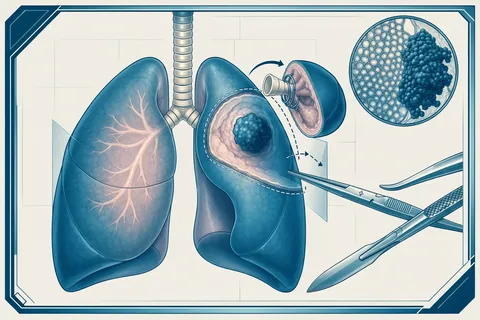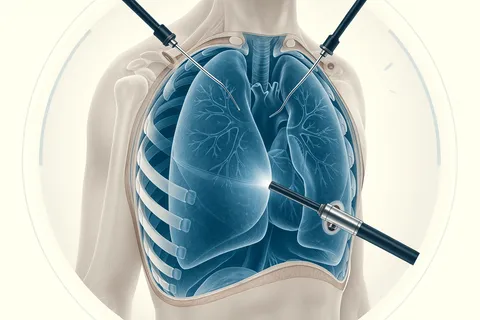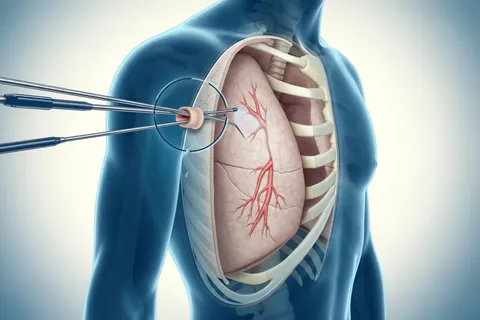
Open lung surgery is the oldest surgical method used to treat thoracic surgery conditions. In open lung surgery, also called thoracotomy, the chest wall is opened during the operation, as the name suggests.
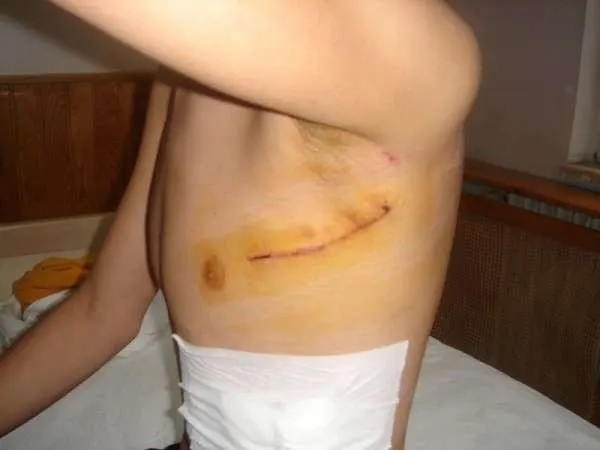
How is open lung surgery performed?
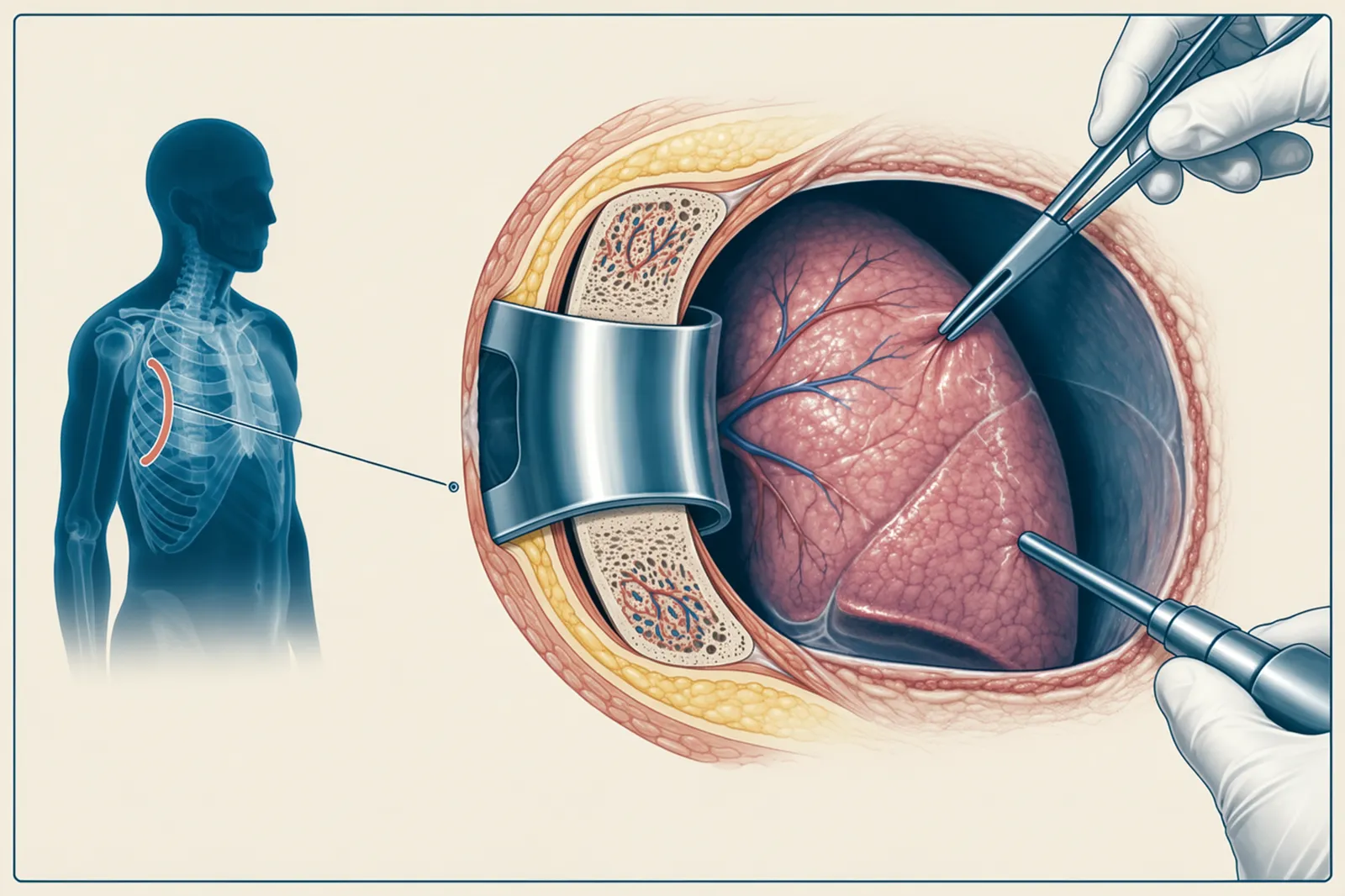
In open lung surgery, the chest cavity, called the thorax, is entered by opening the space between the ribs. Through a 20-25 cm incision made in this area, the muscles over the chest wall are first cut. The chest cavity is then opened with a screw-operated device called a retractor, and the necessary procedure is carried out inside.
The incision site in open lung surgery can vary. It may be under the breast, on the side, or at the back around the shoulder blade.
Which conditions is open lung surgery used for?
Open lung surgery may be preferred for major operations involving the lungs, esophagus, trachea and mediastinum. However, over the last 20 years, the most commonly preferred method in thoracic surgery has been closed lung surgery. Because closed lung surgery requires a high level of experience, in some centers even minor lung operations may be performed as open surgery.
What are the advantages and disadvantages of open lung surgery?
As surgeons, our main goal should be to intervene in a way that causes the least possible harm to the patient. For this reason, if the patient and the circumstances are suitable, our preference should be closed lung surgery, which is performed through smaller incisions. However, in some cases, though rarely, we may prefer open lung surgery.
The main disadvantages of open lung surgery are:
- Because the surgical area is large, the risk of bleeding is higher.
- Because of the size of the surgical area, patients may feel more pain after surgery.
- The patient may need to stay in the hospital for 5-6 days after surgery.
- The risk of complications after surgery is higher.
There is also a form of open lung surgery called "muscle-sparing thoracotomy," which is performed with a smaller incision and less cutting. After surgery, 1 or 2 chest tubes, also called "drains," which are hose-like tubes about the thickness of a finger, are placed in the chest cavity, and these drains may need to stay in place for a few days.

Prof. Dr. Erdal Okur · Thoracic Surgery
BiographyDo you have a question about this topic? Ask a question