What Is Bronchoscopy? How Is It Done, Is It Dangerous, Can It Spread Cancer?
"What is bronchoscopy, how is it done, is it dangerous, can it spread cancer, why is it done and what do the results show?" are frequently asked questions. In this article, thoracic surgeon Prof. Dr. Erdal Okur answers these common questions about bronchoscopy.
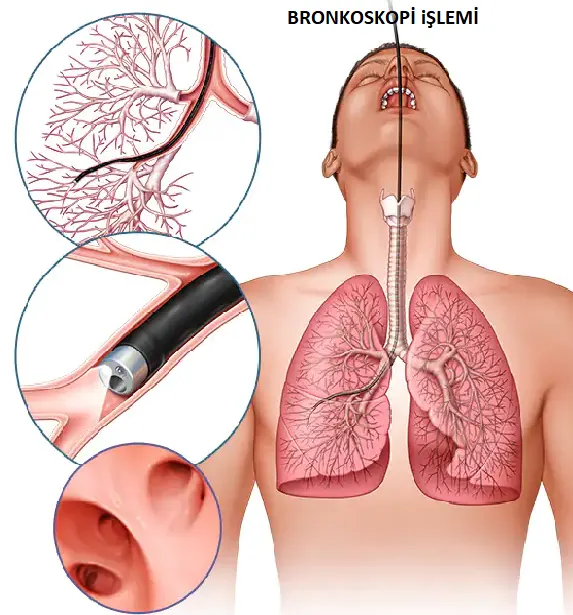
What Is Bronchoscopy?
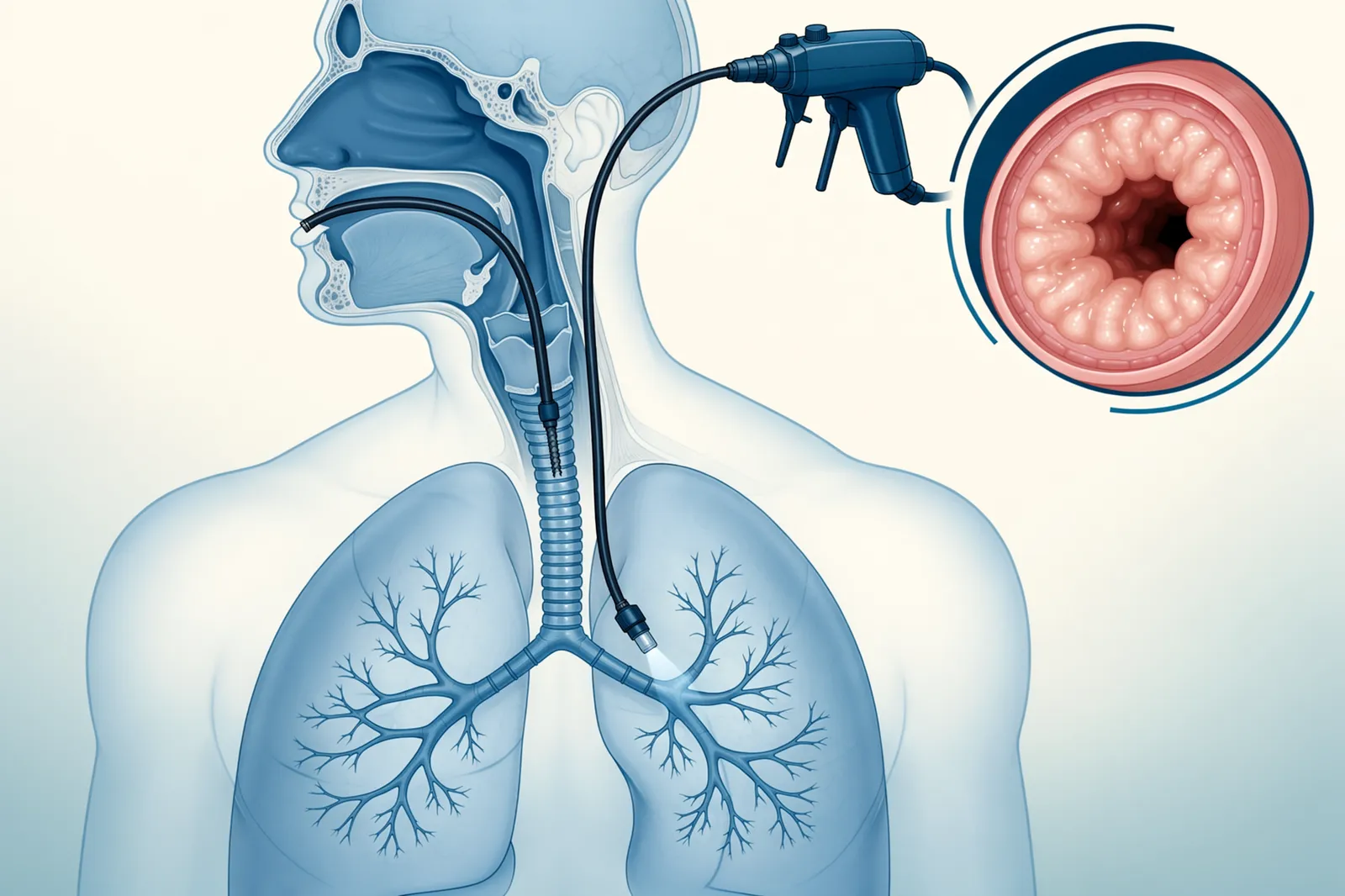
Bronchoscopy is an endoscopic method used to view, diagnose and treat the lungs and airways. A bronchoscope, a thin tube with a light and a camera, is passed into the windpipe and bronchi so that the airways can be examined directly.
Bronchoscopy is not only used for viewing; procedures such as tissue biopsy, collecting sputum or secretion samples, removing foreign objects and clearing blockages can also be performed.
When was bronchoscopy first used?
The origins of bronchoscopy go back to 1876 and the German general surgeon Gustav Killian. Killian performed the procedure using devices called esophagoscopes at the time to remove a foreign object, such as a piece of pork bone, from the airway. In the early 1900s, Chevalier Jackson advanced the field in the United States by developing rigid bronchoscope prototypes with devices that allowed illumination and visual examination. The real turning point for flexible fiberoptic bronchoscopy came in Japan in the 1960s with Dr. Shigeto Ikeda; a prototype was developed in 1964, and in 1968 the device was accepted as suitable for commercial use.
In Turkey, the first rigid bronchoscopy was performed at Heybeliada Sanatorium on September 14, 1950, and the first flexible fiberoptic bronchoscopy was performed in 1978 by Dr. Sumru Beder.
Many studies have examined the safety of bronchoscopy, and the results generally show that the risks of the procedure are low:
An article titled "Diagnostic Bronchoscopy: State of the Art," published in a journal of the ERS (European Respiratory Society), reported a morbidity rate of 0.1%-2.5% and a mortality rate below 0.05% for flexible bronchoscopy procedures.
In a study at a university hospital analyzing 124 consecutive procedures, complications included temporary drops in oxygen levels and, in some cases, conditions such as pneumothorax, but no deaths were reported.
A more recent study titled "Comfort and safety of bronchoscopy performed under local anesthesia and sedation" examined differences in post-procedure safety between patients aged 75 and older and younger patients; safe results were also achieved in the older group, and the rate of serious complications was found to be low.
These and similar studies show that, with proper preparation, an experienced team and correct sterilization processes, bronchoscopy is considered a safe procedure.
How Is Bronchoscopy Done?
The bronchoscopy procedure takes place step by step as follows:
Preparation: The patient is evaluated before the procedure, blood tests are done and fasting is required.
Sedation or anesthesia: Flexible bronchoscopy is usually performed with sedation and local anesthesia, while rigid bronchoscopy is performed under general anesthesia.
The procedure: The bronchoscope is advanced into the airways through the mouth or nose. Camera images are obtained, and a biopsy or sampling can be performed. The procedure takes 15-45 minutes.
Afterward: The patient is kept under observation; a mild sore throat and cough are normal.
Why Is Bronchoscopy Done?
Bronchoscopy is done for both diagnosis and treatment:
For diagnosis: Suspected lung cancer, lung nodules of unknown cause, long-lasting cough, recurrent pneumonia, blood in the sputum.
For treatment: Controlling bleeding, opening a tumor or blockage in the airway, removing a foreign object, placing a stent.
Is Bronchoscopy Dangerous?
Bronchoscopy is generally a safe procedure. However, as with any medical procedure, there are some risks:
Common mild effects: Hoarseness, sore throat, cough, slightly bloody sputum.
Rare complications: Severe bleeding, pneumothorax (collapsed lung), infection, anesthesia-related problems.
When performed by an experienced thoracic surgeon under appropriate conditions, bronchoscopy is considered safe.
Can Bronchoscopy Spread Cancer?
One of the questions patients ask most often is "Can bronchoscopy or a biopsy spread cancer?" Scientific studies show that the risk of a bronchoscopic biopsy spreading cancer is extremely low. A biopsy is very important for an accurate cancer diagnosis and treatment plan. For this reason, its benefit far outweighs its risk.
What Can Bronchoscopy Results Show?
The information that can be obtained from bronchoscopy includes:
- Normal airway findings
- Signs of infection and microbiology test results
- The presence of a tumor or lesion, with a definitive diagnosis by biopsy
- When needed, the results of treatment procedures (stent, ablation, etc.)
The patient's further treatment plan is made based on these results.
What Should I Pay Attention to Before and After Bronchoscopy?
- You should fast for at least 6-8 hours before the procedure.
- Blood-thinning medications must be reported to the doctor.
- You should not drive for 24 hours after the procedure.
- If shortness of breath, severe bleeding or a high fever develops, you should seek medical care urgently.
Bronchoscopy is a procedure that has been in use for about 150 years and has become much safer with advances in medical technology. Since 1876, its contribution to diagnosis and treatment has grown thanks to developments such as the transition from rigid bronchoscopy to flexible fiberoptic bronchoscopy, improved image quality and the spread of therapeutic methods under the umbrella of interventional pulmonology.
Current academic studies show that morbidity and mortality rates are very low, that the risks of the procedure are usually limited to mild and temporary symptoms, and that serious complications are rare. Therefore, bronchoscopy performed under appropriate conditions has become a safe method whose benefits are high compared with its risks.

Prof. Dr. Erdal Okur · Thoracic Surgery
BiographyDo you have a question about this topic? Ask a question