What is VATS surgery?
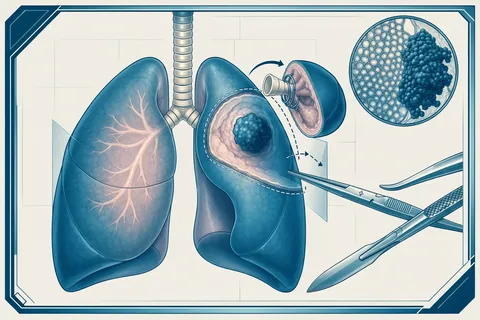
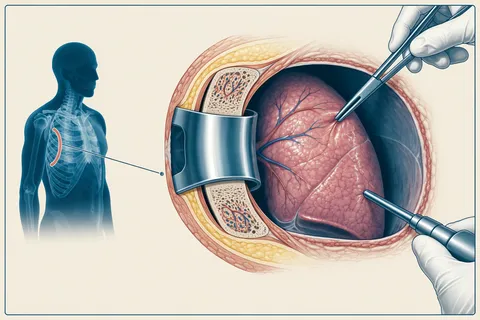
VATS (Video-Assisted Thoracoscopic Surgery) is a minimally invasive surgical technique used to operate on organs inside the chest, such as the lungs and the chest cavity. VATS offers a less invasive approach than traditional open surgery and is performed through smaller incisions.
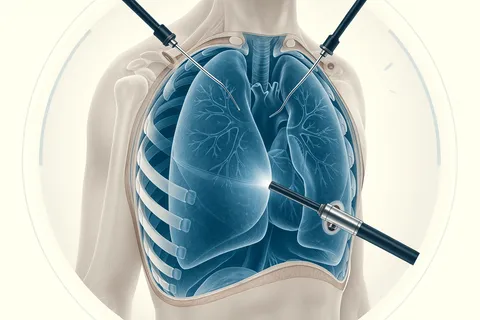
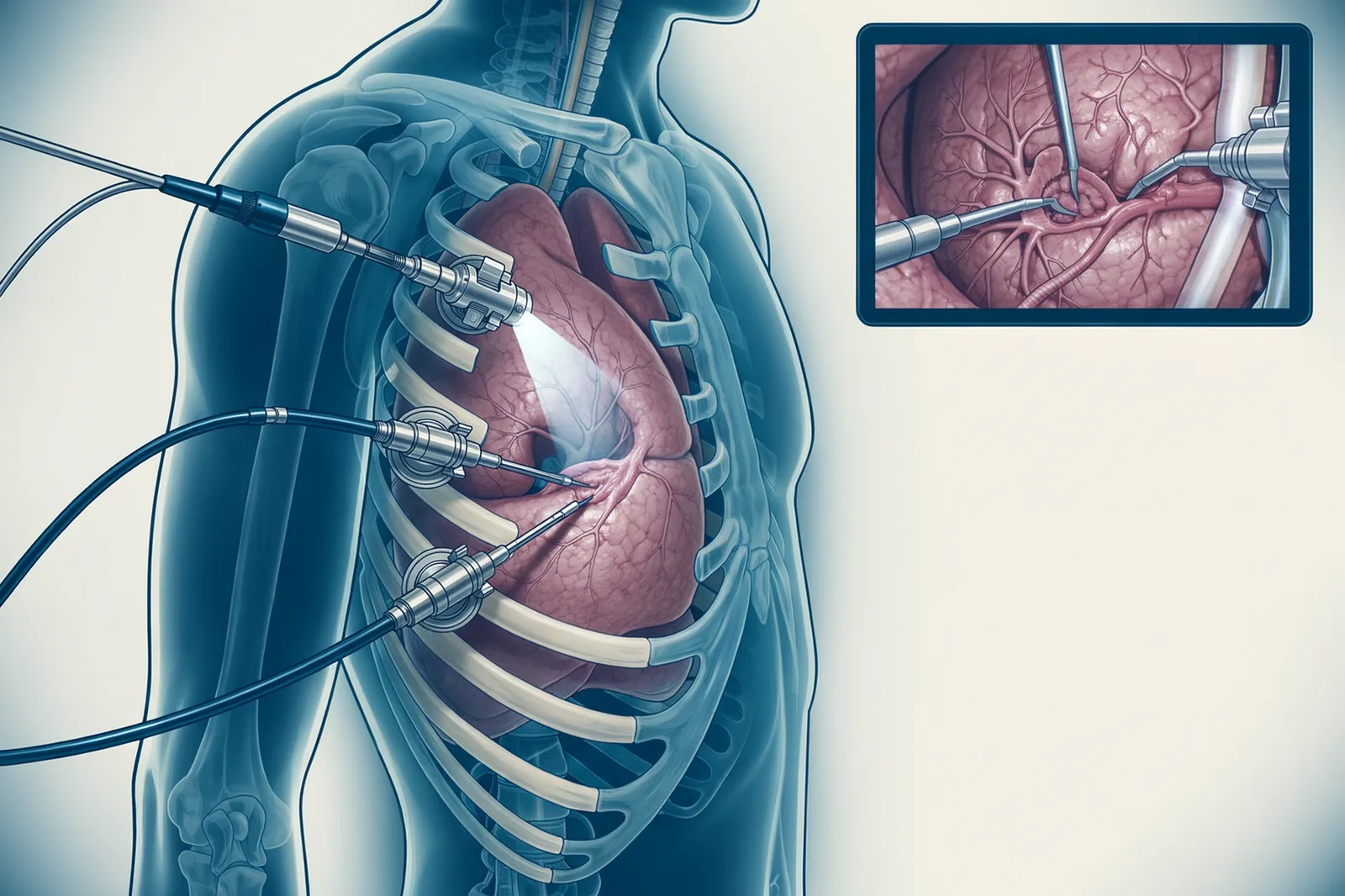
During VATS surgery, a thin tube with a camera at its tip, called a thoracoscope, and long, thin surgical instruments made for this operation are used. These instruments are inserted into the chest cavity through one (the single-incision VATS method) or several small incisions. Thanks to the camera, the surgeon sees the lungs and other organs and tissues inside the chest cavity on a screen. Other special hand instruments are used by the surgeon to perform the operation.
VATS surgery can be done for 2 purposes.
Diagnostic VATS: Performed to take samples (biopsy) from abnormal growths in the organs inside the chest cavity (the lung, pleura and the organs in the mediastinum), or to take samples from accumulated fluid and drain it.
Therapeutic VATS: The VATS method can be used for the surgical treatment of the lung, the lining of the lung (pleura) and the organs of the mediastinum inside the chest cavity, above all for lung cancer.
The VATS method can be an effective surgical option for almost all operations in the field of thoracic surgery. However, every patient is different, and the type of operation and the approach should be evaluated by the surgeon based on the patient's particular situation.
How is VATS performed?
The VATS (Video-Assisted Thoracoscopic Surgery) procedure includes the following basic steps:
1. Preparation: The patient is placed under general anesthesia and a sterile surgical environment is prepared.
2. Small Incisions: The surgeon makes one (or several) small incisions of 1-3 cm in the chest area. The camera and surgical instruments are inserted into the chest cavity through this incision, and the operation inside the chest cavity is performed while viewing a video screen.
3. Camera Image: Access to the inside of the chest is achieved with a thoracoscope (camera). Through this camera, the surgeon views the internal organs.
4. Operation: The surgeon performs the procedure with the thoracoscope and thin surgical instruments. Lung surgery, biopsy or other surgical procedures can be performed.
5. Closure: The incisions are closed, and stitches or surgical glue may be used.
6. Recovery: The patient is kept under observation after surgery and the recovery process begins.
VATS is a less invasive method than traditional open surgery and usually offers a faster recovery.
What are the advantages of the VATS method?
The VATS (Video-Assisted Thoracoscopic Surgery) method has many advantages:
1. Less Pain: Because VATS requires smaller incisions, it causes less postoperative pain than traditional open surgery.
2. Less Bleeding: There is less blood loss during VATS, which reduces the need for transfusion.
- Short Hospital Stay: The hospital stay is usually shorter with VATS. The patient can be discharged sooner.
4. Smaller Surgical Scar: The incisions needed for VATS are smaller, leaving smaller and less noticeable scars.
5. Faster Recovery: The period after surgery performed with VATS offers faster recovery than traditional open surgery. Patients can usually return to normal daily activities more quickly.
6. Fewer Complications: VATS may reduce the risk of infection and other surgery-related complications.
7. Minimizing Breathing Problems: The need for a ventilator after VATS may be lower, which can help the patient breathe more comfortably.
VATS is a preferred method in many thoracic surgery procedures and can have a more positive effect on patients' recovery. However, every patient is different, so it is important to talk with your doctor to determine which surgical method is most appropriate.
How long does VATS surgery take?
The length of VATS (Video-Assisted Thoracoscopic Surgery) can vary depending on the type of operation and its technical requirements. The type of operation, the details of the procedures it involves and the patient's particular medical condition are the main factors that determine how long the operation will take. In general, VATS operations can be completed in a shorter time than traditional open surgery. Your surgeon will clearly state this time before the operation.
What should I pay attention to after VATS surgery?
Things to pay attention to after VATS surgery include:
Following Your Doctor's Instructions: Take the medications your doctor recommends regularly, do not forget your appointments and do not hesitate to ask your doctor any questions.
Balancing Rest and Activity: Rest is important after surgery, but return to normal activities gradually. Move without overdoing it.
Taking Care of Your Wounds: Keep your incisions clean and dry. Follow the wound care your doctor recommends regularly.
Avoiding Smoking and Alcohol: Smoking and drinking alcohol can have a negative effect on your recovery.
Stay away from these substances for the period your doctor specifies.
Not Neglecting Regular Check-ups: Attend your check-ups on the dates your doctor sets.
This is important for monitoring your progress after surgery and preventing possible complications.
These measures are important for protecting your health after surgery and for a speedy recovery.
Frequently asked questions
What is VATS surgery done for?
VATS can be done for diagnosis and for treatment. Diagnostic VATS is used to take tissue samples (biopsy) from organs in the chest cavity or to sample and drain accumulated fluid; therapeutic VATS is used for the surgical treatment of diseases of the lung, the lining of the lung and the mediastinum, above all lung cancer.
How long does VATS surgery take?
The duration depends on the type of operation, the procedures it involves and the patient's medical condition. In general, VATS operations can be completed in a shorter time than open surgery; the surgeon states the expected duration before the operation.

Prof. Dr. Erdal Okur · Thoracic Surgery
BiographyDo you have a question about this topic? Ask a question