What Is Bronchiectasis?
Bronchiectasis is a chronic disease in which the bronchial system develops progressive and irreversible widening and sac formation due to infection and certain other causes.
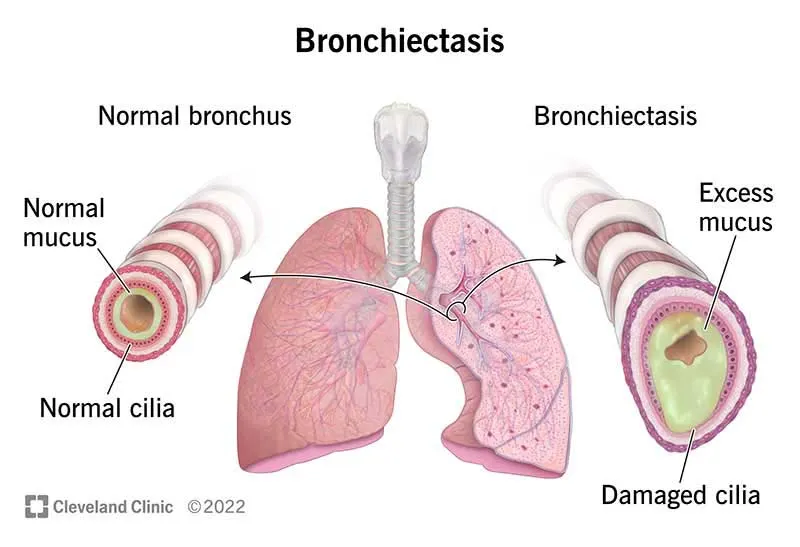
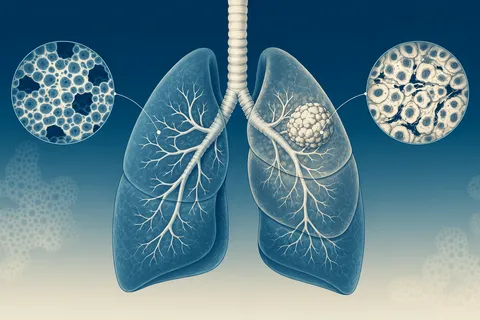
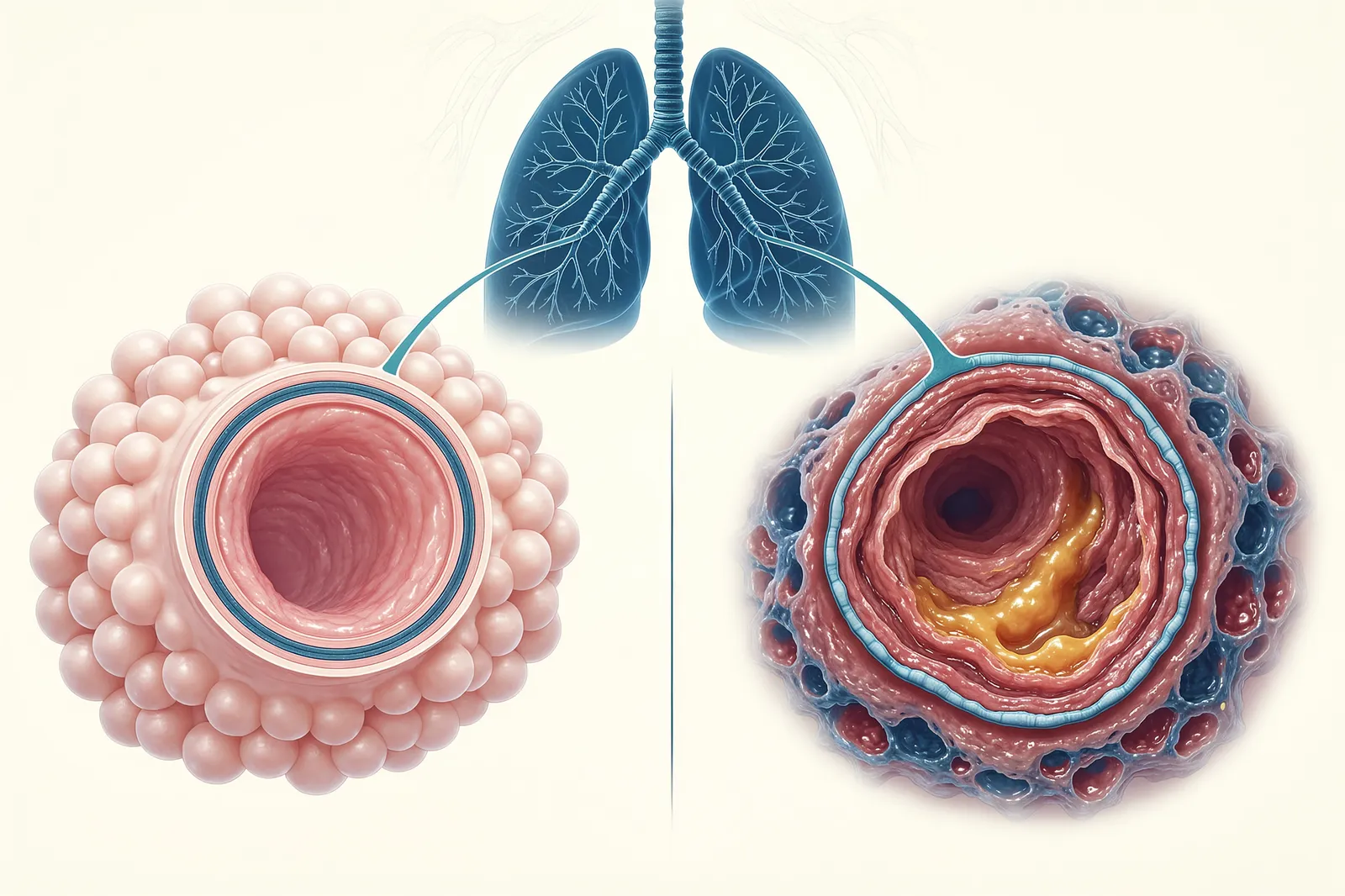
Bronchiectasis is a chronic lung disease caused by permanent widening and structural damage of the bronchi, the airways that carry air in the lungs. Healthy bronchi keep the lungs clean by clearing the mucus produced in the airways. In bronchiectasis, however, the bronchial wall is damaged, so this natural cleaning mechanism breaks down.
As a result, sputum collects in the bronchi, bacteria multiply more easily and recurrent infections can develop. Each infection episode can cause new damage to the bronchi and lead to progression of the disease. For this reason, bronchiectasis is a progressive disease that requires early diagnosis and regular follow-up.
Bronchiectasis can be a disease on its own, and it can also develop as a result of severe lung infections in childhood, congenital diseases or certain causes that block the airways.
What Causes Bronchiectasis?
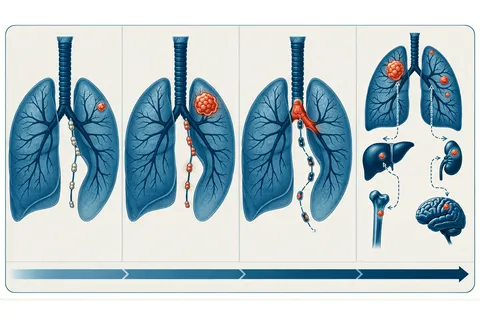
The most important mechanism leading to bronchiectasis is damage to the bronchial wall and inadequate clearance of mucus. This leads to recurrent infections, and the infections cause further damage to the bronchi. In this way, the disease creates a cycle that progresses over time.
The most common causes of bronchiectasis are:
Severe Lung Infections in Childhood
Severe pneumonia, whooping cough, measles or poorly treated lung infections in childhood can cause permanent damage to the bronchi.
Long-Term Airway Blockage
Foreign bodies that enter the bronchi, benign or malignant tumors, or structures compressing the bronchus from the outside can block the airway and lead to bronchiectasis.
Congenital and Genetic Diseases
In some inherited diseases, the self-cleaning mechanism of the bronchi is impaired from birth. These include:
- Cystic fibrosis
- Kartagener syndrome
- Primary ciliary dyskinesia
- Alpha-1 antitrypsin deficiency
Immune System Diseases
In some patients whose immune system does not work well, frequent infections can lead to bronchiectasis over time.
Radiotherapy and Other Lung Diseases
Radiotherapy to the chest area or certain chronic lung diseases can also cause permanent structural changes in the bronchi.
What Are the Symptoms of Bronchiectasis?
Bronchiectasis can progress slowly over many years. The most prominent features of the disease are a long-lasting cough and constant sputum production.
The most common symptoms are:
- Long-lasting or chronic cough
- Constant sputum production
- Foul-smelling sputum
- Recurrent lung infections
- Shortness of breath
- Wheezing
- Chest pain
- Fatigue
- Infection episodes with fever
Some patients may have blood in their sputum. This condition, called hemoptysis, is important and should always be evaluated. In particular, heavy bleeding may require emergency treatment.
In patients with advanced bronchiectasis, "clubbing" of the fingertips may develop. This is one of the important physical examination findings that can be seen in long-standing lung diseases.
How Is Bronchiectasis Diagnosed?
Bronchiectasis is diagnosed by evaluating the patient's complaints, physical examination findings and imaging together.
A chest X-ray may be taken during the initial evaluation. However, the most valuable imaging method for a definitive diagnosis of bronchiectasis is high-resolution computed tomography (HRCT).
Computed tomography allows a detailed assessment of:
- The degree of bronchial widening
- The extent of the disease
- Which areas of the lung are involved
- Accompanying signs of infection
After diagnosis, blood tests, sputum culture, pulmonary function tests and other tests considered necessary may also be done to investigate the cause of the disease.
What Are the Types of Bronchiectasis?
Based on CT images, bronchiectasis is divided into three main groups:
- Cylindrical bronchiectasis
- Varicose bronchiectasis
- Cystic bronchiectasis
Whether the disease is found in only one area or is widespread in both lungs is also important for treatment planning.
How Is Bronchiectasis Treated?
In bronchiectasis, the main goal is not to eliminate the disease completely but to reduce infections, help clear sputum and slow the progression of the disease.
Treatment methods that may be used include:
- Appropriate antibiotic treatment during infections
- Medications that open the airways
- Expectorant and mucus-thinning treatments
- Respiratory physiotherapy
- Regular exercise
- Quitting smoking
- Flu and pneumonia vaccinations
Many patients can be kept under control for many years with medication and respiratory physiotherapy.
When Does Bronchiectasis Require Surgery?
Most patients with bronchiectasis do not need surgical treatment. However, in some patients, complaints that seriously impair quality of life may continue despite medication.
Surgical treatment may be considered in the following situations:
- More than two serious infections a year for two years in a row
- Recurrent or significant amounts of blood in the sputum
- Disease located in a limited part of the lung
- No congenital diseases causing widespread bronchiectasis
- Heavy sputum and bad breath that significantly impair quality of life
The goal of surgical treatment is to remove the segment or lobe where the disease is located. In this way, the source of infection is removed while aiming to preserve healthy lung tissue.
How Is Bronchiectasis Surgery Performed?
In bronchiectasis surgery, the extent of the operation is determined by how widespread the disease is.
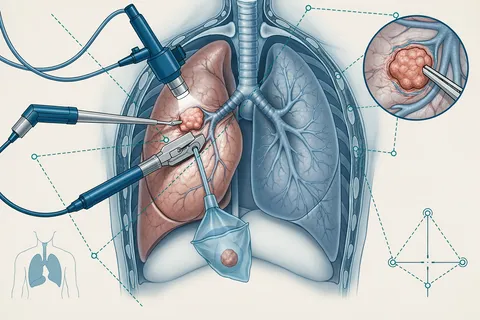
If only a limited segment is affected, segmentectomy may be performed; if a larger area is involved, lobectomy may be performed.
In suitable patients, these operations can now be performed with closed methods (video-assisted thoracoscopic surgery, VATS). However, the surgical method is determined by the patient's anatomy, the extent of the disease and the surgeon's assessment.
What Happens If Bronchiectasis Is Not Treated?
Untreated bronchiectasis can progress over time.
Recurrent infections can cause further damage to the bronchi, and as a result the following may develop:
- Reduced breathing capacity
- Constant sputum production
- Recurrent pneumonia
- Blood in the sputum
- A marked decline in quality of life
For this reason, it is important that patients with bronchiectasis be followed regularly by pulmonologists and, when needed, by thoracic surgeons.
Frequently Asked Questions
What is bronchiectasis?
Bronchiectasis is a chronic lung disease that develops when the bronchi, the airways that carry air in the lungs, become permanently widened and structurally damaged. Because of the damage to the bronchial wall, sputum cannot be cleared adequately, which can lead to recurrent infections and, over time, progression of the disease.
Does bronchiectasis heal completely?
The structural damage in bronchi affected by bronchiectasis cannot be reversed. However, with appropriate medication, respiratory physiotherapy and regular follow-up, infections can be controlled, progression of the disease can be slowed and quality of life can be improved.
Is bronchiectasis contagious?
No. Bronchiectasis itself is not a contagious disease. However, some infections that cause bronchiectasis (such as tuberculosis) can be contagious. For this reason, it is important to identify the underlying cause correctly.
What causes bronchiectasis?
Bronchiectasis can develop as a result of severe lung infections in childhood, bronchial blockages, congenital diseases such as cystic fibrosis, immune system diseases and certain chronic lung diseases. In some patients, the exact cause may not be identified.
What are the symptoms of bronchiectasis?
The most common symptoms are a long-lasting cough, constant sputum production, recurrent lung infections, shortness of breath and foul-smelling sputum. In some patients, blood in the sputum is also an important sign of bronchiectasis.
Does bronchiectasis cause shortness of breath?
Yes. Shortness of breath can develop because of damage to the bronchi, especially as the disease progresses or during infections. Regular treatment and breathing exercises can help control this complaint.
What is the cough of bronchiectasis like?
In bronchiectasis, the cough is usually long-lasting and most often comes with sputum. The amount of sputum may increase noticeably in the morning or during infections.
Does bronchiectasis cause blood in the sputum?
Yes. In bronchiectasis, blood may appear in the sputum because of the blood vessels in the damaged bronchial walls. Especially when blood in the sputum recurs or is heavy, a doctor should be seen without delay.
How is bronchiectasis diagnosed?
The most important diagnostic method is high-resolution computed tomography (HRCT). In addition, a chest X-ray, pulmonary function tests, sputum tests and blood tests can also help with the diagnosis.
Can bronchiectasis be treated without surgery?
Yes. Most patients with bronchiectasis can be kept under control with medication, antibiotics, respiratory physiotherapy and regular follow-up. Surgical treatment is only needed in certain groups of patients.
When is surgery performed for bronchiectasis?
Surgical treatment may be considered when the disease is located in a limited part of the lung, when there are frequent infection episodes, when there is recurrent blood in the sputum, or when complaints that seriously impair quality of life persist.
How is bronchiectasis surgery performed?
In surgical treatment, the part of the lung affected by bronchiectasis is removed. Depending on the extent of the disease, segmentectomy or lobectomy may be performed. In suitable patients, the operation can also be performed with closed methods.
Does bronchiectasis surgery provide a definitive solution?
If bronchiectasis involves only a limited part of the lung and patients are appropriately selected, surgical treatment can provide significant benefit. However, surgery is not always appropriate in widespread bronchiectasis, and treatment then relies mainly on medication and respiratory physiotherapy.
Does bronchiectasis progress?
Yes. When it is not treated or when infections are frequent, the damage to the bronchi can increase over time. For this reason, regular follow-up and early treatment of infections are very important.
Does bronchiectasis turn into lung cancer?
No. Bronchiectasis is not a disease that turns directly into lung cancer. However, in people with chronic lung disease, new findings should always be evaluated. When necessary, imaging is used to distinguish between possible diagnoses.
Can patients with bronchiectasis exercise?
Under a doctor's guidance, regular walking, breathing exercises and light aerobic activity are beneficial for patients with bronchiectasis. Exercise can help clear sputum and preserve lung capacity.
What should patients with bronchiectasis pay attention to?
They should not smoke, should protect themselves from respiratory infections, should take the recommended medications regularly and should not skip respiratory physiotherapy. In addition, getting flu and pneumonia vaccinations on time can reduce the risk of infection.
Does bronchiectasis affect life expectancy?
The effect of bronchiectasis on life expectancy depends on the extent of the disease, the underlying cause and whether infections can be brought under control. Many patients who are followed regularly and receive appropriate treatment can continue an active life for many years.
Which specialist should be seen for bronchiectasis?
The diagnosis and medical treatment of bronchiectasis are primarily managed by pulmonologists (chest disease specialists). When surgical treatment is required, the assessment is made by a thoracic surgery specialist.

Prof. Dr. Erdal Okur · Thoracic Surgery
BiographyDo you have a question about this topic? Ask a question