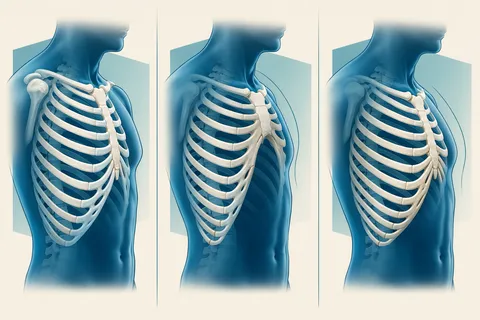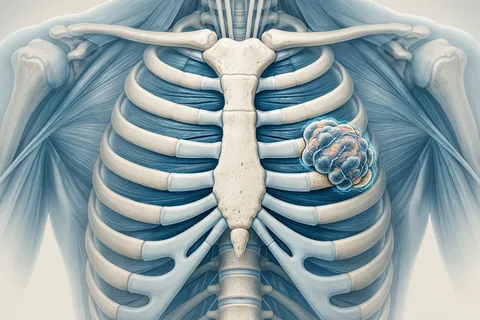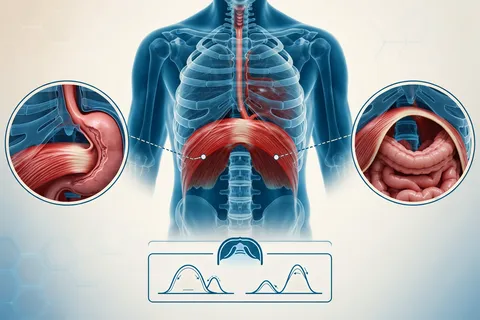
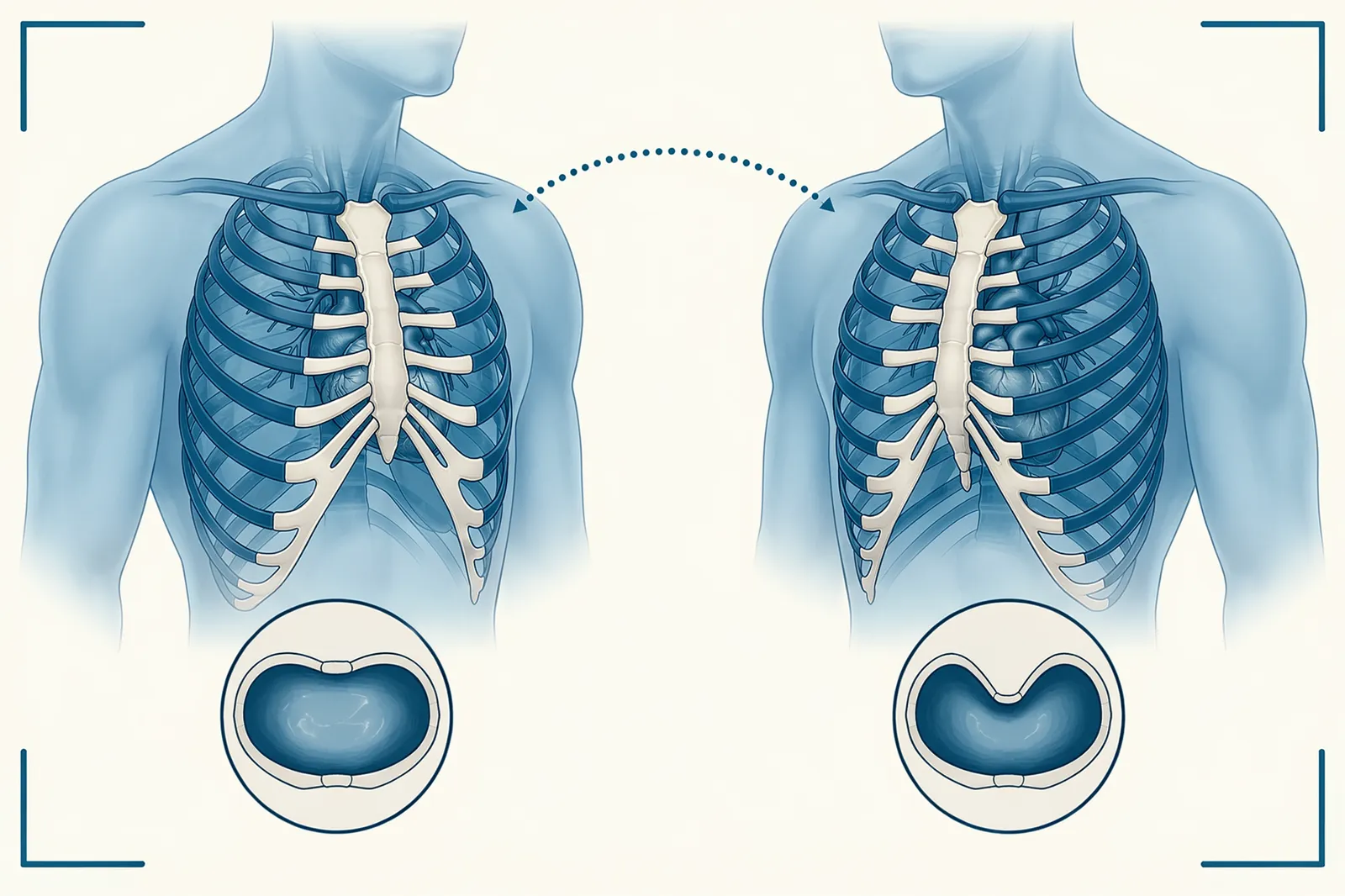
Pectus excavatum (funnel chest) is a chest wall deformity caused by the breastbone (sternum) sinking inward. It is usually present from birth and becomes more noticeable during adolescence. As the rib cage develops, the breastbone and the ribs normally grow symmetrically and at the same rate. If the ribs grow disproportionately, they can push the sternum at the front backward, creating an inward depression in the lower front of the chest; this condition is called pectus excavatum. It can become more pronounced during adolescence and is not a disease but a developmental anomaly.
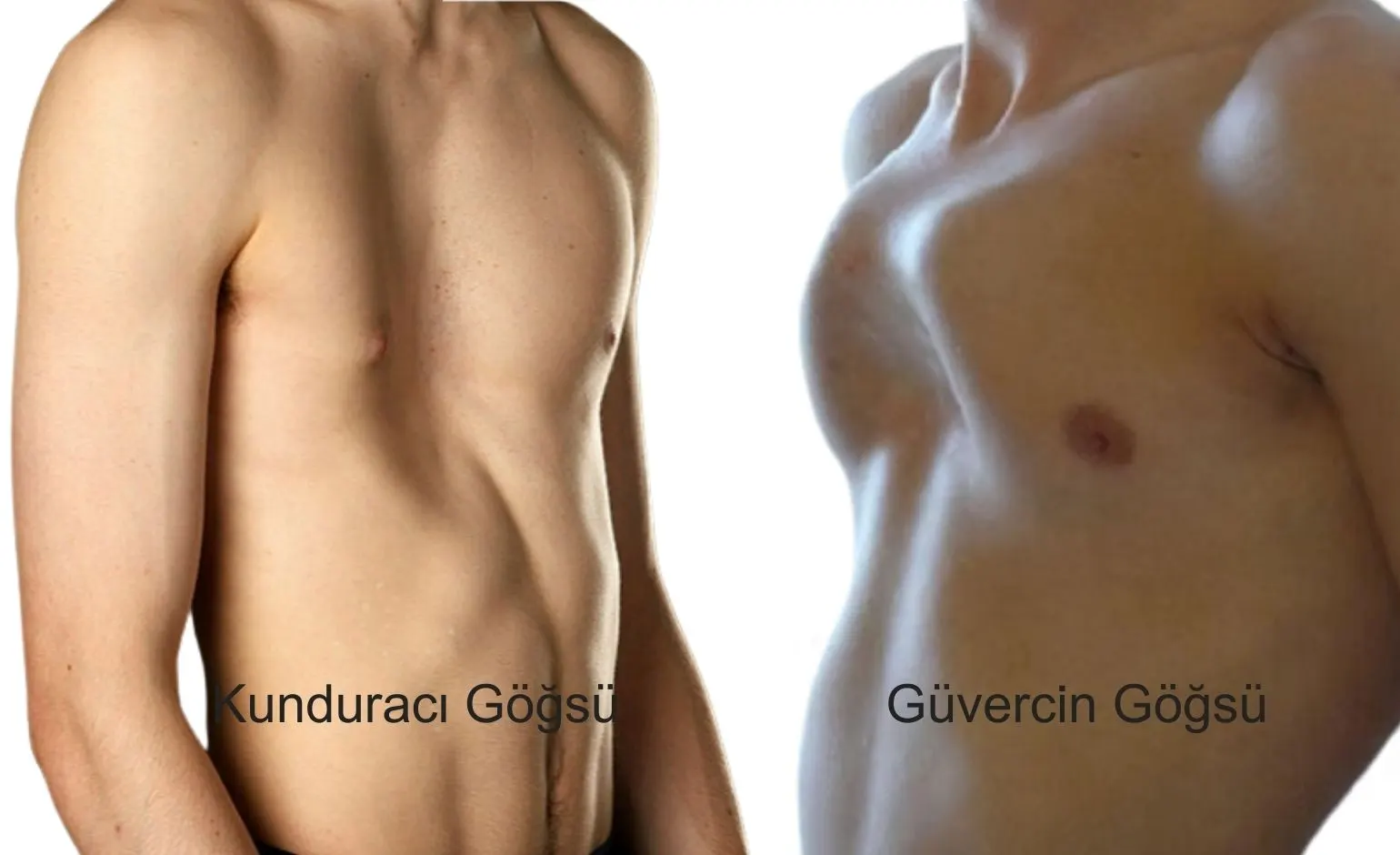
Pectus Excavatum (Funnel Chest) Deformity
Pectus excavatum gives the rib cage a sunken appearance. In some people it is only a cosmetic concern, but if the inward depression is severe, it can press on the heart and lungs, impair heart function or reduce breathing capacity. It can also cause psychological difficulties, especially in young adults.
What is vacuum therapy for pectus excavatum?
Vacuum therapy for pectus excavatum is also known as the vacuum bell method. It can be used in mild to moderate cases of funnel chest. A vacuum device placed on the breastbone creates negative pressure that helps pull the bone outward. It can be partly helpful, usually in childhood, while the ribs and cartilage have not yet hardened. A bell of suitable size is chosen according to the child's age and the size of the deformity, and negative pressure is applied to the deformed area covered by the bell in an effort to pull the front of the chest forward. Its benefit is low during and after adolescence.
What is pigeon chest?
Pigeon chest, also called pectus carinatum, is a chest wall deformity in which the breastbone protrudes forward. In a sense, it is the opposite of pectus excavatum. As the rib cage grows, ribs that grow disproportionately can push the sternum outward. The lower part of the breastbone sticks out. Unlike pectus excavatum, it does not press on the heart or lungs, so it does not cause any health problems. It is a cosmetic concern.
How is pectus surgery performed?
Pectus operations generally use the Ravitch (open) technique or minimally invasive (video-assisted thoracoscopic) techniques. In both excavatum and carinatum deformities, the aim is to bring the lower part of the sternum back to its natural position. Depending on the deformity, a metal bar is placed under or over the sternum to hold it in its natural position.
Can pigeon chest be corrected with exercise?
In pigeon chest (pectus carinatum), in cases where the outward slope is mild, exercises that strengthen the chest muscles may reduce the appearance of the deformity. In addition to exercise, it is recommended that the person pay attention to posture and avoid leaning forward or slumping the shoulders. The most suitable posture is what we call a soldier's stance: the abdomen slightly pulled in, the chest pushed out, and the neck and spine held upright. In serious cases, however, posture correction and exercise alone may not be enough.

Prof. Dr. Erdal Okur · Thoracic Surgery
BiographyDo you have a question about this topic? Ask a question