Lung cancer develops when cells in the lung and small airways turn into malignant cells, multiply abnormally and form a tumor.
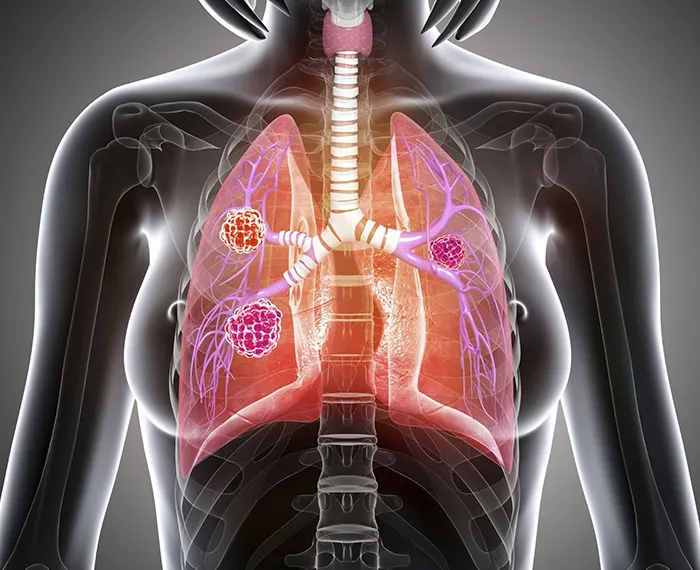
How does lung cancer develop?
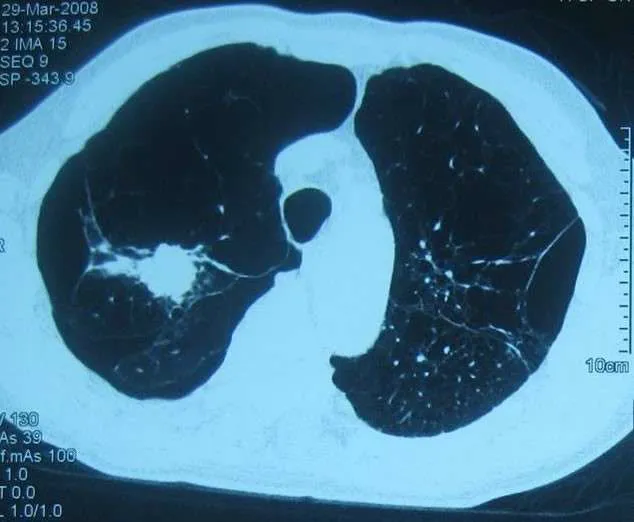
Lung cancer develops when some cells in the lung and small airways undergo a genetic change caused by various external or internal factors, turn into malignant cells, multiply abnormally and form a tumor. It is the most common type of cancer both worldwide and in Turkey, and it causes more deaths than any other cancer. In Turkey, approximately 80,000 new lung cancer patients are diagnosed each year. People who have smoked for many years are at particularly high risk of lung cancer.
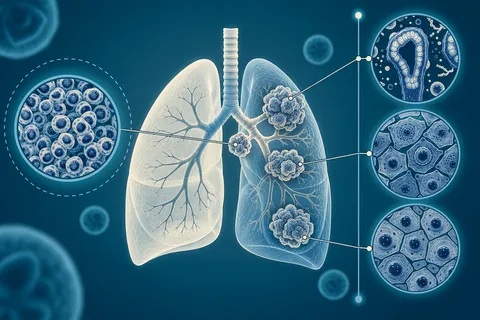
There are two main types of lung cancer:
- Small cell lung cancer
- Non-small cell lung cancer
Non-small cell lung cancers are further divided into three types:
- squamous cell (epidermoid) carcinoma,
- adenocarcinoma, and
- large cell carcinoma.
What Are the Symptoms of Lung Cancer?
Lung cancer is one of the most common cancers in the world and one of the leading causes of cancer death. An important reason for this is that it usually causes no symptoms in its early stages. When lung cancer begins to cause symptoms, this is often a sign that it has progressed to a more advanced stage. For this reason, being aware of the symptoms and having regular check-ups, especially for people in risk groups, makes it possible to catch lung cancer at an early stage.
Lung cancer is an insidious disease and usually causes no symptoms at first. As it progresses, however, the following symptoms may appear:
Persistent Cough A cough that lasts longer than three weeks, gets steadily worse or changes in character may be the first sign of lung cancer.
Coughing Up Blood (Hemoptysis)
Blood-streaked sputum brought up with a cough may be a sign of a tumor in the lung tissue and should always be investigated.
Shortness of Breath Breathing difficulty may develop if the tumor blocks the bronchi or damages lung tissue.
Chest Pain One-sided chest pain that gets worse with deep breathing, coughing or laughing is an important finding.
Hoarseness Hoarseness may occur if the tumor presses on the nerves that supply the vocal cords.
Weight Loss and Fatigue Loss of appetite, noticeable weight loss, general tiredness and weakness are common general symptoms of lung cancer.
Swelling of the Neck and Face In conditions such as superior vena cava syndrome, swelling, bluish discoloration and a feeling of fullness may develop in the face, neck and arms. Superior Vena Cava Syndrome (SVCS) is a clinical condition that occurs when the large vein in the chest called the superior vena cava is compressed or blocked by a tumor or another cause.
What Causes Lung Cancer?
Many risk factors play a role in the development of lung cancer. However, the most important and most modifiable cause is smoking.
Smoking About 85% of lung cancer cases are directly related to smoking. How long a person has smoked, how much and at what age they started determine the risk. Passive smoking also increases the risk in a similar way.
Genetic Predisposition The risk is higher in people with a family history of lung cancer. Genetic factors play a greater role especially in patients diagnosed at a young age.
Asbestos and Radiation Exposure Exposure to harmful substances such as asbestos increases the risk in people who work in construction, shipbuilding or certain industrial sectors. High-dose radiation, for example radiotherapy received in the past, may also play a role.
Air Pollution and Industrial Toxins Air pollution, especially in large cities, as well as exposure to exhaust fumes and substances such as arsenic, chromium and nickel, may contribute to the development of lung cancer.
Chronic Lung Diseases Chronic lung diseases such as COPD, tuberculosis and fibrosis are considered predisposing factors.
Why Is Early Diagnosis Important?
A diagnosis made at an early stage of lung cancer can offer the possibility of surgical treatment and a cure. Screening with low-dose chest computed tomography (LDCT) can be lifesaving, particularly for smokers over the age of 55. Thanks to this screening in people without symptoms, early-stage tumors can be detected.
Why low-dose chest CT?
Low-dose chest computed tomography (LDCT) is a safe, fast and effective screening method used to detect lung cancer at an early stage, especially in high-risk individuals.
The main advantages of low-dose chest CT are:
It Offers a Chance of Early Diagnosis Lung cancer usually progresses without symptoms. With LDCT, a tumor can be caught at an early stage, before symptoms begin. This increases the chance of surgery and prolongs survival.
The Radiation Dose Is Lower It involves approximately 75-90% less radiation than a standard CT scan. Because it is repeated regularly for screening, this low dose is a major advantage for patient safety.
It Saves Lives In large studies conducted in the United States (for example, the NLST study), the lung cancer death rate was reduced by up to 20% in the group screened with low-dose CT.
It Is Especially Effective for People in Risk Groups People at risk for lung cancer include those over 50, those with a family history of cancer and those who smoke. In these individuals, the development of lung cancer and whether a nodule or suspicious mass has formed are monitored with a low-dose chest CT once a year. When a suspicious finding is detected, a decision for follow-up or surgery can be made according to the risk group.
Who is it recommended for?
- People over 50
- People who have smoked for 20 years or more
- People who still smoke or who have quit within the last 15 years
Low-dose chest CT is not a way to prevent lung cancer; it is needed for early diagnosis. If you are in a risk group, it is recommended that you have this screening without waiting for symptoms, because lung cancer diagnosed early can be completely treated.
Do Not Ignore the Symptoms Lung cancer is a disease with a high chance of successful treatment when diagnosed early. If you have symptoms such as a long-lasting cough, blood in your sputum or unexplained shortness of breath, be sure to see a thoracic surgery specialist. Remember, early diagnosis saves lives.
What are the diagnostic methods for lung cancer?
The diagnostic process begins when a person goes to the hospital after symptoms of lung cancer appear. The most important initial diagnostic tool is radiological imaging. Although large tumors can easily be seen on a plain chest X-ray, some small tumors, or tumors hidden by their location, may not be visible on an X-ray. Computed tomography is now used much more widely because it has become very common, is fast and can be performed with a very low radiation dose. When a mass is seen on imaging, further tests are needed for diagnosis. These include examining the sputum for cancer cells, bronchoscopy, CT-guided needle biopsy, PET-CT and other tests.
Why is PET-CT needed in lung cancer?
Another very valuable test in patients diagnosed with or suspected of having lung cancer is positron emission tomography combined with computed tomography (PET-CT). With PET-CT, it is possible to tell with a fairly high degree of accuracy whether the mass in the lung is cancerous, and also to see whether lung cancer has spread (metastasized) anywhere in the body or whether another cancer is present. PET-CT should always be performed both in diagnosed cases and in cases without a diagnosis but with a high suspicion of lung cancer.
When is needle biopsy used in lung cancer?
Tumors located near the outer surfaces of the lungs are difficult to reach with bronchoscopy. In some cases, it may be necessary to take a tissue sample from these tumors with a needle inserted from the outside under CT guidance. A biopsy shows both whether the mass is cancer and what its cell type is.
What is staging in lung cancer?
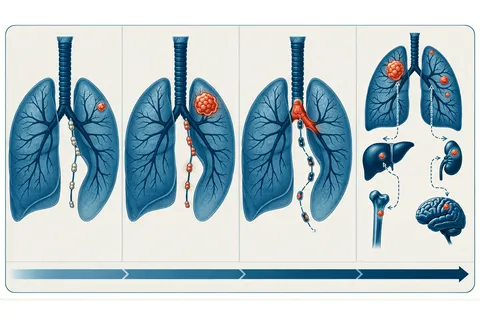
Staging lung cancer is necessary to know what stage the cancer is at, whether it is a new cancer at the beginning or one that has spread and advanced, to decide which method will be used to treat the disease, and to have information about the course of the disease and life expectancy. Roughly speaking, there are 4 stages in lung cancer. Again, to put it very simply, in stages one and two the cancer is confined within one lung, in stage three it has spread to lymph nodes outside the lung, and in stage four it has spread to distant parts of the body. For this reason, disease in the first two stages is considered local, early-stage disease and can be treated with surgery, while later stages are considered advanced, and systemic treatments (chemotherapy, etc.) are used.
How is lung cancer staged?
Lung cancer is staged according to the TNM classification.
Tumor size and location - T In lung cancer, the size of the tumor is an important criterion in staging the disease: for example, a 2 cm tumor and a 5 cm or 8 cm tumor are at different stages. In addition, a cancer located in the main bronchus and a cancer located in one corner of the lung are also at different stages.
Whether there is spread to lymph nodes - N No spread to lymph nodes indicates an earlier stage (stage 1), while spread to lymph nodes indicates a more advanced stage (stage 2 or 3).
Whether there is spread to other organs (metastasis) - M When lung cancer is not diagnosed early, it can spread from the lung where it started to the other lung, the brain, bones, adrenal glands, liver or other parts of the body. In this case, the cancer has reached its most advanced stage, stage 4.
What happens in stage four lung cancer?
Stage four lung cancer is the most advanced stage. At this stage, the cancer is found not only in the lung but also in other neighboring organs and tissues of the body, meaning it has metastasized (spread). At this stage, when surgery does not appear to be an option, drug treatment or other treatment options may be used first, as directed by the treating physician.
What treatments are used for lung cancer?
The main treatment options for lung cancer are:
- surgery (operative treatment),
- chemotherapy (drug treatment),
- immunotherapy, and
- radiotherapy (radiation treatment).
The form of treatment that gives the best results and offers hope of being completely free of this disease is operative treatment, that is, surgery. However, only about 20-25% of patients are suitable for surgical treatment, because for surgery to be an option, the lung cancer must be at an early stage (stage 1 and stage 2, very rarely stage 3).
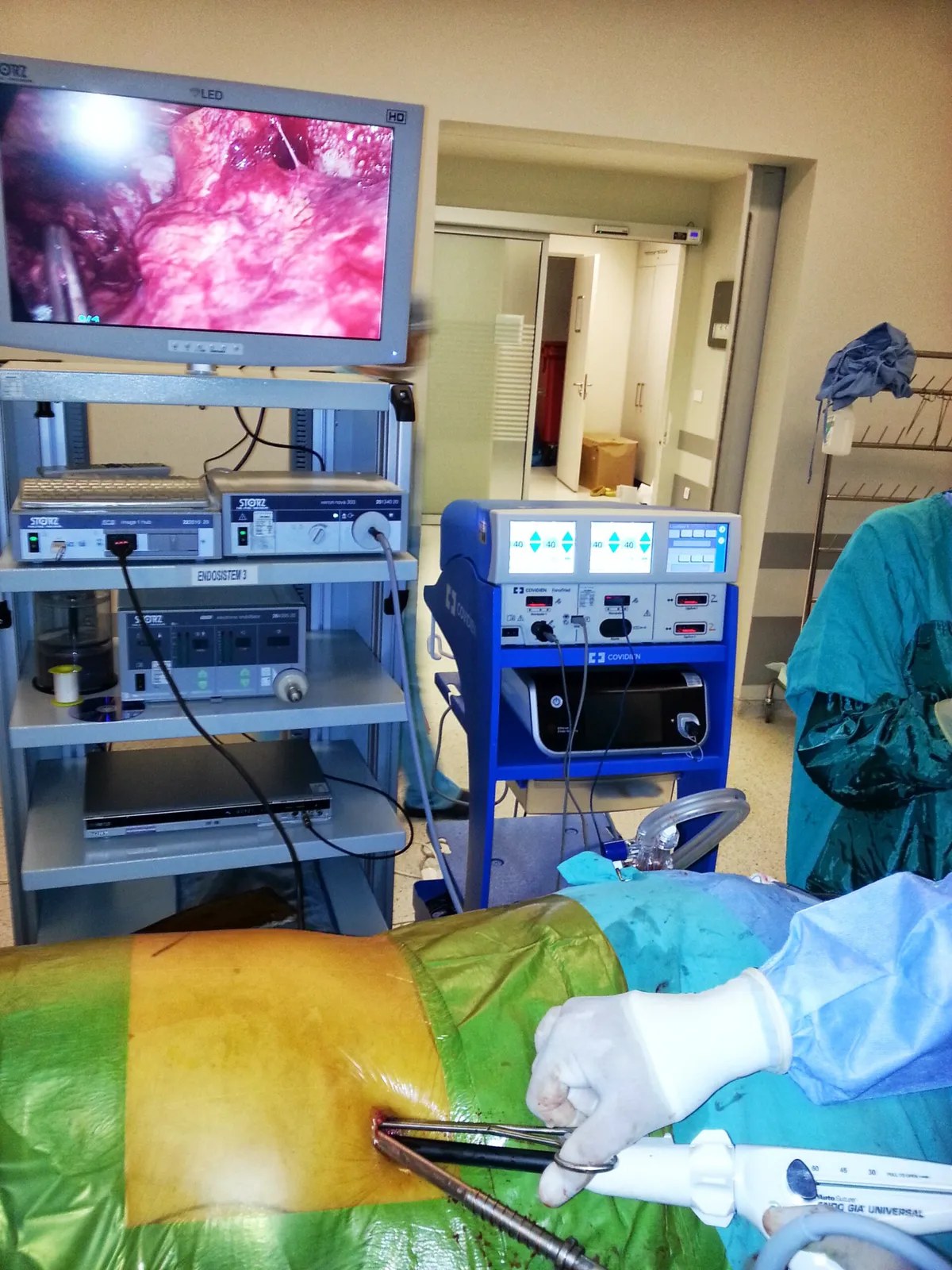
When can surgery be performed for lung cancer?
- The cancer must be in only part of the lung and must not have spread (metastasized) to the lymph nodes next to the windpipe, in the area we call the mediastinum, or to other parts of the body. To determine whether there is spread to these lymph nodes, it may be necessary to take tissue samples from them with methods such as mediastinoscopy or mediastinotomy.
- The patient's general condition and performance (heart, condition and capacity of the other lung) must be suitable for this operation.
Of the 4 stages of lung cancer, surgical treatment is appropriate in stages 1 and 2, and life expectancy (5-year) in these patients can reach 80-90%. For this reason, surgical treatment is a very important opportunity for patients diagnosed at early stages and should not be missed.
How is lung cancer surgery performed?
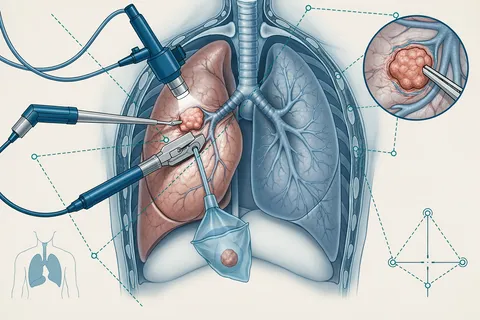
Operations for lung cancer are mainly performed in two ways: open (thoracotomy) and closed (thoracoscopy, video-assisted thoracoscopic surgery - VATS) surgery.
The closed (video-assisted thoracoscopic, VATS) method used in leading centers around the world has many advantages for the patient.
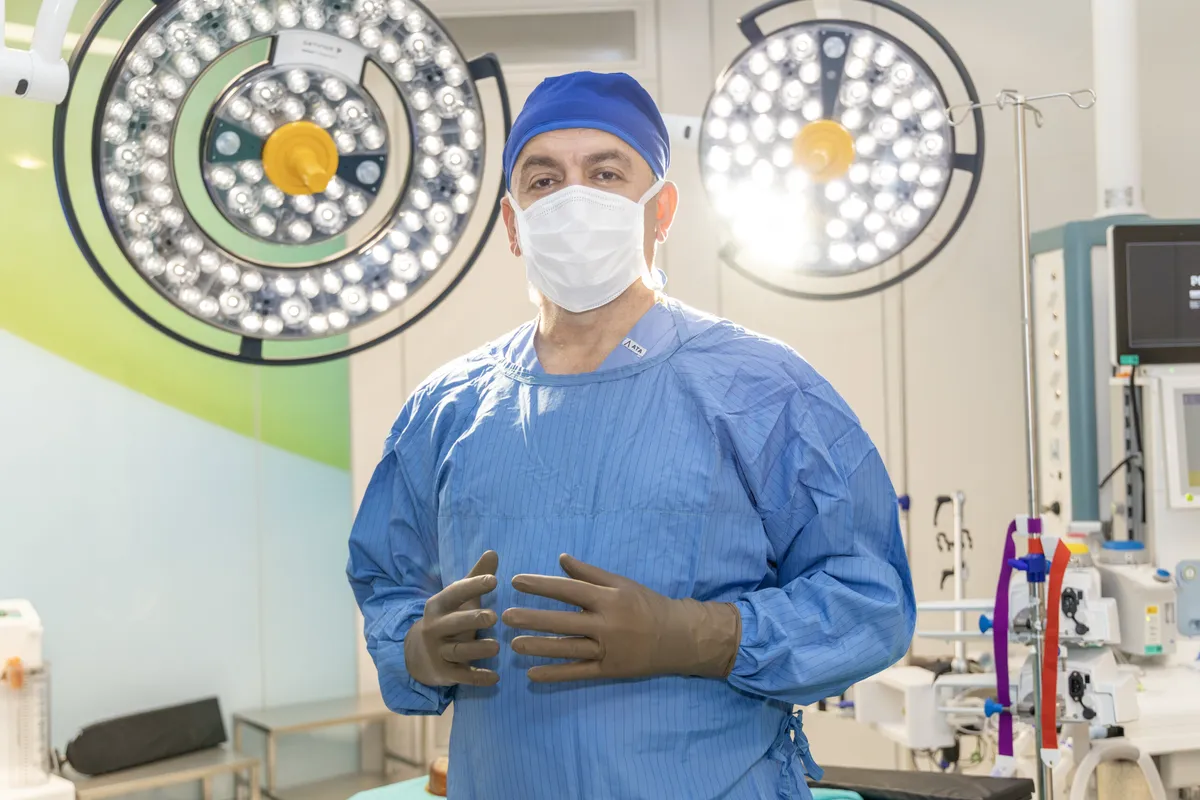 Prof. Dr. Erdal Okur paved the way for lung cancer operations to be performed with the closed method by using closed lung surgery for lung cancer for the first time in Turkey.
Is chemotherapy needed after lung cancer surgery?
Lung cancer surgery removes the cancerous area in the lung. The removed tissue is sent to pathology. Based on the pathology reports after surgery, and once the patient's staging has been fully completed, the decision on whether additional treatment is needed, and which treatment should be given and how, is made jointly by the patient's surgeon, a medical oncologist and a radiation oncologist.
What is the recovery rate in lung cancer?
Most patients whose cancer is caught at an early stage and who can undergo surgery can be completely free of this disease. Even if recurrence occurs during follow-up in some patients after surgery, these patients live much longer than those who do not have surgery.
In patients whose disease is too advanced for surgery, new chemotherapy and radiotherapy methods also significantly increase survival compared with receiving no treatment.
Stage Four Lung Cancer Survival (Prognosis)
A question patients and their families often ask is "the chance of recovering from this disease with the planned treatment." The statistics below reflect the results of international studies based on the treatment of very large numbers of patients.
- One-year survival probability (Cancer Research UK data): the 1-year survival rate in patients with stage four lung cancer is 14%.
- Five-year survival probability (US National Cancer Institute data): the 5-year survival rate in patients with stage four lung cancer is 1%.
FREQUENTLY ASKED QUESTIONS
Can lung cancer be detected with a blood test?
We can say that there is no specific blood test for diagnosing lung cancer. Some blood test results may be abnormal in lung cancer, but these are not specific to lung cancer. For this reason, it is not possible to detect lung cancer with blood tests.
Does a lung nodule turn into lung cancer?
Lung cancer first appears as a nodule and grows and may spread over time. Of course, not every nodule is lung cancer. In fact, a lung nodule does not turn into cancer; it either is cancer from the beginning or it is not. If it is cancer, it will grow. For this reason, nodules seen in the lung are followed with CT scans at intervals, because they may be cancer.
How is lung cancer diagnosed most definitively?
The most definitive diagnosis of lung cancer is made by taking a biopsy (tissue sample) from the cancer. Even if CT and PET images raise a very high level of suspicion, a biopsy of the mass or complete removal of the mass with surgery is required for a definitive diagnosis.
What is the deadliest type of lung cancer?
All lung cancers are malignant tumors, and their clinical course may differ from patient to patient. While some slow-growing adenocarcinomas have a relatively better course, some large cell lung tumors have a worse course depending on their subtypes. Small cell lung cancer also spreads early and quickly.
How many hours does lung cancer surgery take?
The length of lung cancer surgery can vary greatly depending on the location of the cancer, the surgical method and the experience of the surgeon. Closed surgery (video-assisted thoracoscopic surgery, VATS), when performed by an experienced surgeon, generally takes less time (1-3 hours). Operations in patients with large tumors or tumors close to critical organs are usually performed with the open method, and the operation takes longer (it can last up to 4-6 hours).
Is there pain after lung cancer surgery?
Lung operations are generally painful operations. In the open method (thoracotomy), there is more pain because the space between the ribs is opened with metal instruments and the ribs are injured during this process. Although there is less pain in closed (VATS) operations, the chest tube placed during surgery will cause some pain until it is removed after the operation. In many centers, to reduce pain after surgery, a catheter can be placed in the back into the spinal canal and pain medication can be given continuously through it.
What should be considered after lung cancer surgery?
Smoking should be stopped, care should be taken to live in places with clean air, a healthy diet should be followed and check-ups should be done at the intervals recommended by the doctors.
Videos

Why early diagnosis matters in lung cancer

Lung cancer is not a single disease; it has subtypes

What is the stage of lung cancer, and why is staging done?

In lung cancer, does tumor size or spread matter more?

The cough he thought was the flu turned out to be a sign of cancer

Living with one lung

Prof. Dr. Erdal Okur · Thoracic Surgery
BiographyDo you have a question about this topic? Ask a question