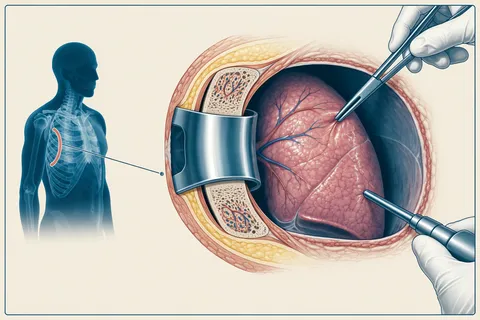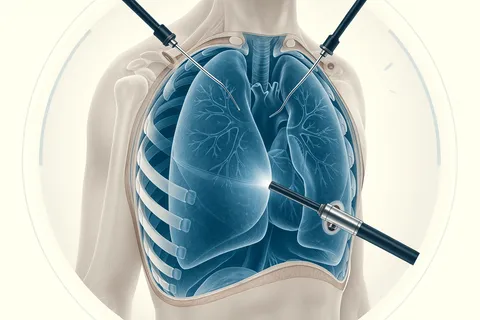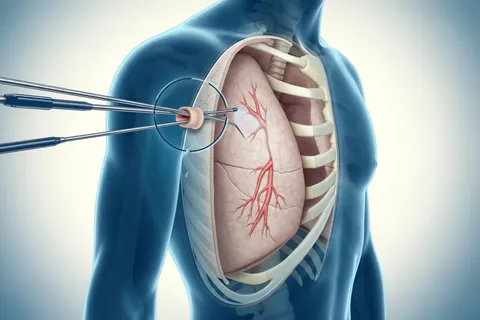
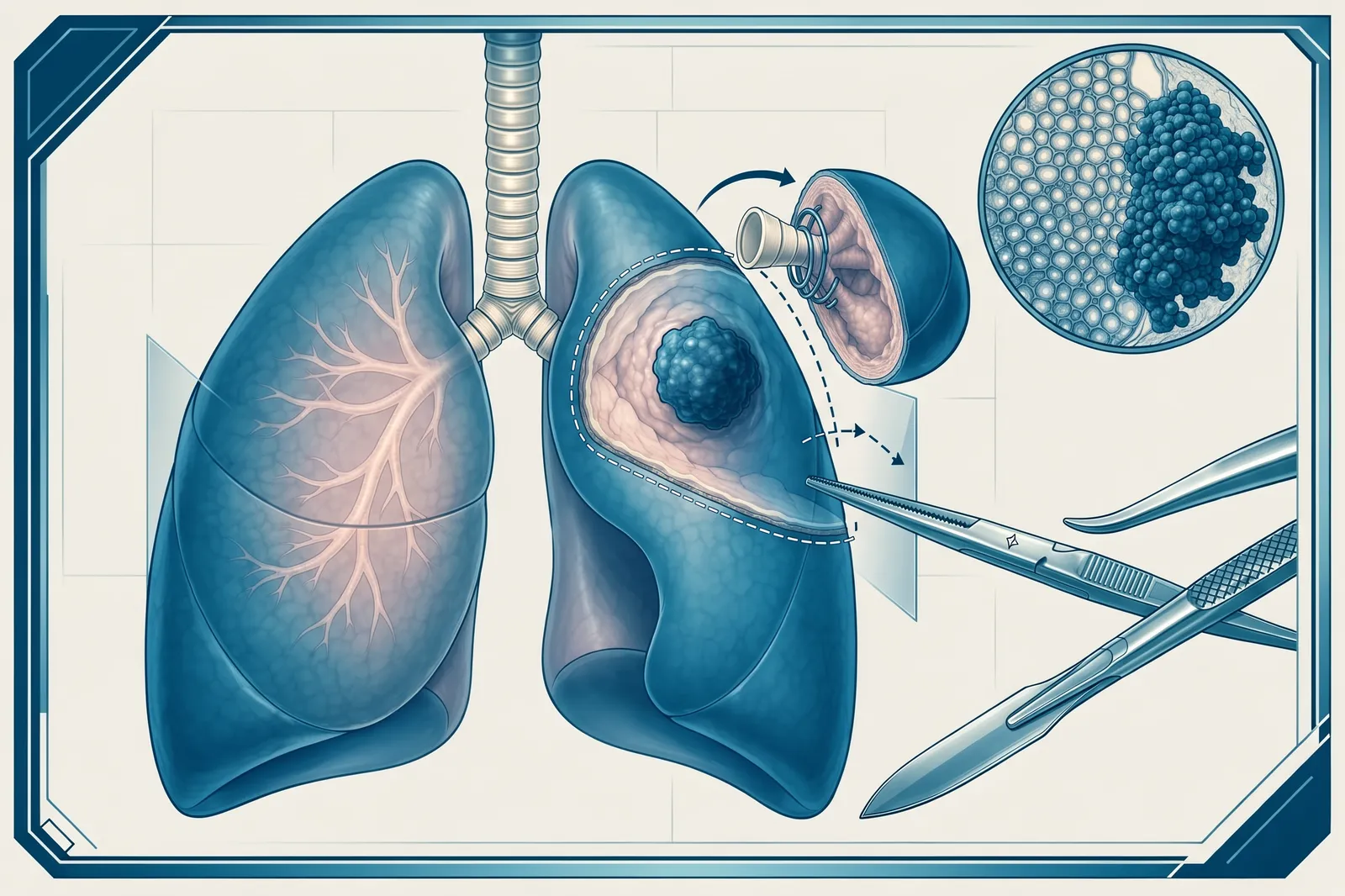
Lung cancer surgery is a treatment that aims to remove cancerous lung tissue and the necessary regional lymph nodes in patients who are suitable for surgical treatment. It is an important treatment option, particularly in early-stage non-small cell lung cancer. In some patients with locally advanced disease, it may also be used together with other treatments.
However, not every patient diagnosed with lung cancer undergoes surgery. The decision to operate is made after evaluating the stage of the disease, the location of the tumor, spread to the lymph nodes, the patient's breathing capacity and overall health.
Who Is Lung Cancer Surgery For?
Lung cancer surgery is most often performed in patients with early-stage non-small cell lung cancer, where the disease can be completely removed surgically. In addition, in some patients with locally advanced disease, surgery may be reconsidered after treatments given before the operation.
When determining whether a patient is suitable for surgery, not only the size of the tumor but also the benefit the patient may gain from the operation and the risks surgery may pose are taken into account.
The main factors considered in the surgical decision are:
- The stage of the disease and the location of the tumor in the lung
- Whether there is spread to the lymph nodes or distant organs
- Whether the tumor can be completely removed surgically
- The patient's breathing capacity
- Heart and vascular health and any coexisting conditions
- Overall physical condition and surgical risks
In some patients, surgery is planned directly as the first treatment, while in others systemic treatments such as chemotherapy or immunotherapy may be given first. The order of treatment is determined by a multidisciplinary team based on the features of the disease.
How Are Patients Evaluated Before Lung Cancer Surgery?
Before lung cancer surgery, two basic questions need to be answered: Can the cancer be completely removed surgically, and can the patient safely undergo the planned operation?
For this reason, the preoperative evaluation covers both the extent of the disease and the patient's breathing and overall health.
Depending on the patient's clinical features, the following tests may be performed:
- Chest computed tomography (CT): Used to assess the size and location of the tumor and its relationship to surrounding tissues.
- PET-CT: Helps investigate whether the disease has spread to the lymph nodes or other parts of the body.
- Bronchoscopy: May be performed to examine the airways and, when necessary, take a tissue sample.
- EBUS or mediastinoscopy: When necessary, samples are taken from the lymph nodes inside the chest to help determine the stage of the disease.
- Pulmonary function tests: Performed to assess the patient's current lung capacity and the breathing reserve expected after surgery.
- Cardiology and anesthesia evaluation: Helps determine the risks of surgery.
In patients who need them, brain magnetic resonance imaging, measurement of diffusing capacity (DLCO) and additional cardiopulmonary tests may also be included in the evaluation.
Although imaging methods such as PET-CT provide important information, they do not replace pathological examination of the lymph nodes when this is needed.
The purpose of the preoperative evaluation is to determine the appropriate surgical procedure and to weigh the benefit of the operation for the patient against the possible risks.
How Does the Stage of the Disease Affect the Decision for Lung Cancer Surgery?
The stage of lung cancer is one of the most important factors affecting the decision for surgical treatment. During staging, the size of the tumor and its relationship to surrounding tissues, the status of the lymph nodes and whether there is spread to distant organs are assessed.
- Early stage (Stage I and II): In non-small cell lung cancers that can be removed surgically, surgery is often one of the main treatment options. However, some patients may need additional treatment before or after the operation.
- Locally advanced stage (Stage III): Not every patient at this stage is suitable for surgery. In selected patients, treatment before surgery and the operation itself may be planned together following a multidisciplinary evaluation.
- Advanced stage (Stage IV): In patients with distant organ metastasis, surgery is usually not the main treatment. However, surgical procedures may be considered in a limited number of selected patients or for the treatment of certain complications.
In small cell lung cancer, the role of surgery is more limited, and it may be considered only in carefully selected patients with very early-stage disease.
For detailed information about the TNM classification and stages of lung cancer, you can visit the Lung Cancer Stages page.
What Types of Surgery Are Performed for Lung Cancer?
The amount of lung tissue removed in lung cancer surgery is not the same for every patient. The appropriate surgical procedure is determined by evaluating the size, location and stage of the tumor and the patient's breathing capacity.
The main goal of surgery is to remove the cancerous tissue completely with appropriate surgical margins while preserving as much healthy lung tissue as possible.
Lobectomy
Lobectomy is the complete removal of the lobe of the lung that contains the tumor. The right lung has three lobes and the left lung has two.
Lobectomy is one of the anatomical resection methods commonly used for non-small cell lung cancers that are suitable for surgery. It may be preferred especially in patients for whom a more limited resection is not appropriate from an oncological standpoint.
During the operation, the lobe containing the tumor is removed and the necessary regional lymph nodes are evaluated.
Segmentectomy
Segmentectomy is the removal of the anatomical segment containing the tumor rather than the entire lobe of the lung.
It may be considered in some early-stage lung cancers, particularly those that are small, located in the outer part of the lung and have suitable features. The advantage of segmentectomy is that more healthy lung tissue can be preserved in suitable patients.
However, not every small tumor is suitable for segmentectomy. The location of the tumor, the adequacy of the surgical margins and the status of the lymph nodes must be evaluated together.
Wedge Resection
Wedge resection is the removal of a lesion in the lung together with a limited amount of the surrounding healthy tissue. Unlike segmentectomy, an entire anatomical segment of the lung is not removed.
This method may be used in some patients for diagnostic purposes or when a more extensive operation is not appropriate. It may also be considered for selected small tumors.
However, wedge resection may not provide adequate oncological treatment for every patient with lung cancer. For this reason, the patients in whom it is used must be selected carefully.
Pneumonectomy
Pneumonectomy is the removal of the entire right or left lung.
It may be necessary in some patients whose tumor is centrally located, affects the main bronchi or large blood vessels, and cannot be completely removed with more limited surgical methods.
Because removing an entire lung can significantly affect breathing capacity, the patient's lung and heart function are evaluated in detail before surgery.
Whenever possible, surgical options that preserve more lung tissue are considered.
Why Are Lymph Nodes Evaluated During Lung Cancer Surgery?
One of the important steps of lung cancer surgery is the evaluation of the lymph nodes around the lung and in the central part of the chest cavity, called the mediastinum.
Lung cancer can spread to the regional lymph nodes. For this reason, removing only the tumor in the lung is not always enough to determine the true extent of the disease.
Sampling or systematically removing the appropriate lymph nodes during surgery is important for:
- Accurately determining the pathological stage of the disease
- Understanding whether the cancer has spread to the lymph nodes
- Assessing whether the surgery is oncologically adequate
- Helping determine whether additional treatment is needed after surgery
How the lymph nodes are evaluated is planned according to the features of the tumor and the surgical procedure performed.
The main goal in lung cancer surgery is to remove the tumor with appropriate surgical margins and to carry out the necessary lymph node evaluation in line with oncological principles.
How Is the Choice Between Open and Closed Surgery Made for Lung Cancer?
Lung cancer operations can be performed with open or closed surgical methods. In suitable patients, minimally invasive methods such as video-assisted thoracoscopic surgery (VATS) can be used.
However, the decision to perform the operation open or closed is not based on incision size alone.
The location of the tumor, its relationship to the large blood vessels and bronchi, the extent of the operation and surgical safety are evaluated together. For some patients closed surgery is a suitable option, while for others open surgery may be preferred.
The main goal is to remove the cancerous tissue safely and in line with oncological principles.
For more detailed information about surgical approaches, you can visit the following pages:
Recovery After Lung Cancer Surgery
Recovery after lung cancer surgery varies depending on the extent of the operation, the surgical method used, the patient's breathing capacity and overall health.
After surgery, the patient's breathing function, pain level and general clinical condition are monitored. When needed, a chest tube (drain) is placed to remove air or fluid from the chest cavity and is removed at the appropriate time depending on the clinical situation.
The following are especially important during recovery:
- Pain control: Appropriate pain treatment is planned so that the patient can breathe comfortably, cough and move.
- Breathing exercises: Recommended exercises are done to support adequate inflation of the lungs.
- Early mobilization: The patient is encouraged to get up and start walking at the appropriate time.
- Quitting smoking: Smoking should be stopped, as it can have negative effects on healing and long-term lung health.
- Regular follow-up visits: Wound healing, breathing and, when necessary, imaging results are monitored.
The length of the hospital stay and the time to return to daily life differ for each patient. Recovery may be faster in some patients who have closed surgery, but this is not true for everyone.
After surgery, the pathology report of the removed tissue is reviewed. Whether additional treatment is needed is determined based on the pathological stage and other features of the cancer.
Follow-up after lung cancer surgery is not limited to the healing of the surgical wound. Because the disease may recur, long-term clinical and imaging follow-up is also planned.
What Are the Risks of Lung Cancer Surgery?
Lung cancer surgery is a major surgical procedure that carries certain risks. The level of risk may vary depending on the patient's age, breathing capacity, coexisting conditions and the extent of the planned operation.
The main complications that may occur after surgery are:
- Bleeding: Bleeding may occur during or after surgery.
- Prolonged air leak: If air leaks from the lung tissue into the chest cavity for longer than expected, the drain may need to stay in longer.
- Infection: Infection may develop at the surgical site or in the lung.
- Pneumonia: A lung infection may develop in the period after surgery.
- Breathing problems: Respiratory failure may develop, especially in patients with limited breathing reserve.
- Heart rhythm disorders: Rhythm disorders, especially atrial fibrillation, may be seen after surgery.
- Blood clots: Complications such as deep vein thrombosis and pulmonary embolism may develop.
Although rarer, there is also a risk of serious complications and death.
Lung and heart evaluations before surgery, appropriate surgical planning and postoperative follow-up play an important role in managing these risks.
Risks specific to each patient are evaluated by the thoracic surgery and anesthesia teams before the decision to operate is made.
This content has been prepared for general information purposes. Suitability for lung cancer surgery and the surgical method to be used are determined through a medical evaluation specific to each patient.
Frequently asked questions
How long does lung cancer surgery take?
The length of lung cancer surgery depends on the extent of the procedure and the surgical approach. Operations such as lobectomy, segmentectomy and pneumonectomy do not take the same amount of time. The location of the tumor and the anatomical features encountered during surgery can also affect the duration.
How many days will I stay in the hospital after lung cancer surgery?
The length of the hospital stay depends on the operation performed and how the patient is recovering. Whether the chest tube can be removed, whether pain is under control and whether breathing function is adequate are all considered in the discharge decision. For this reason, there is no single length of stay that applies to every patient.
Can I breathe normally after part of my lung is removed?
After part of the lung is removed, many patients may have enough breathing capacity to carry on with daily life. However, breathing after surgery depends on how much lung tissue is removed and on lung function before the operation. For this reason, the expected breathing capacity of the remaining lung is assessed before surgery.
Is there pain after lung cancer surgery?
Yes. Pain may be felt at the incision site and in the chest wall after lung cancer surgery. The severity and duration of the pain vary depending on the surgical approach and the individual patient. Appropriate pain control helps the patient breathe comfortably and start moving early.
Will I need chemotherapy after lung cancer surgery?
Not every patient needs chemotherapy after lung cancer surgery. The decision about additional treatment is based on the pathology result, the stage of the cancer, the status of the lymph nodes and the biological features of the tumor. In some patients, immunotherapy or targeted therapies may also be considered in addition to chemotherapy.
Which doctor performs lung cancer surgery?
Lung cancer surgery is performed by thoracic surgeons. The decision for surgical treatment may be planned through a joint evaluation by thoracic surgery, pulmonology, medical oncology and other relevant specialties, depending on the features of the disease.

Prof. Dr. Erdal Okur · Thoracic Surgery
BiographyDo you have a question about this topic? Ask a question