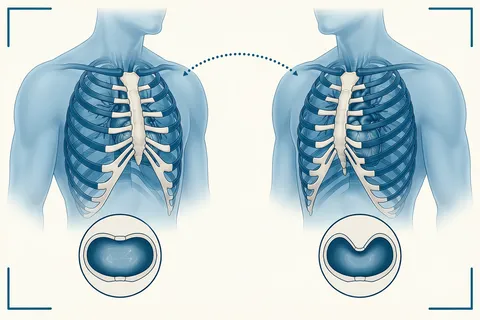
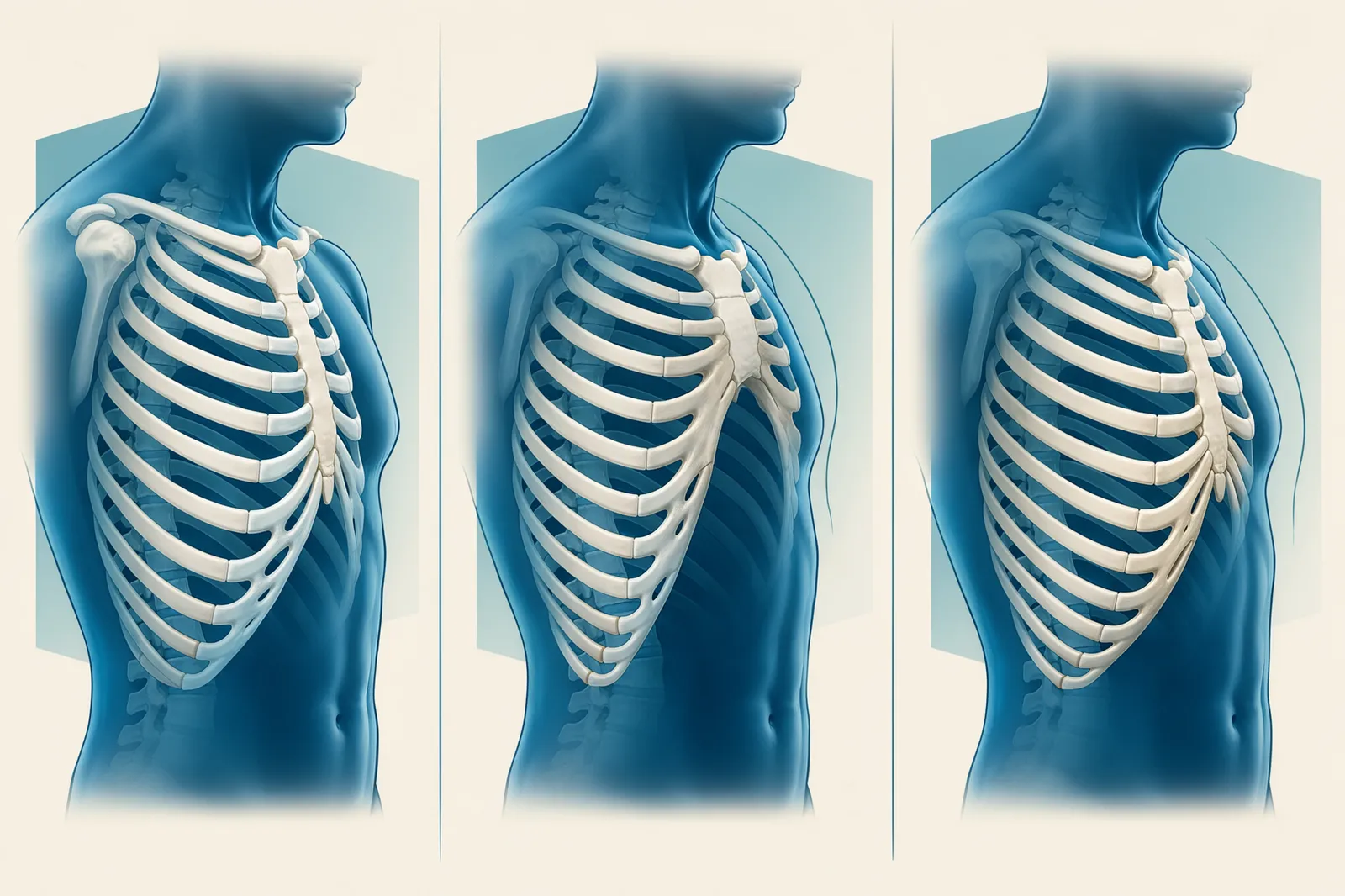
Deformities of the front of the chest that usually begin at birth and become more pronounced later are called pectus deformities. They occur in about 1 in 300-400 people. They most commonly appear in 2 forms: the front of the chest protruding outward (pectus carinatum) or sinking inward (pectus excavatum). Other chest wall abnormalities are much rarer.

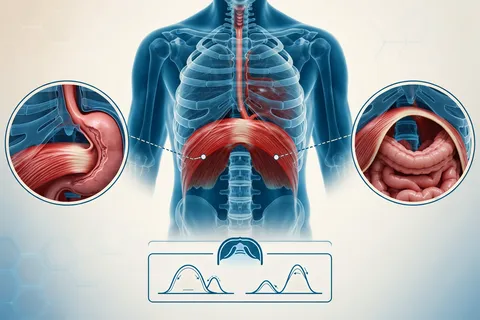
A front chest wall that is sunken inward is called pectus excavatum, or funnel chest. This chest wall anomaly is often only a cosmetic problem, but when the front of the chest is turned inward to a severe degree, it can press on organs such as the heart and lungs and impair their function.
What is pigeon chest?
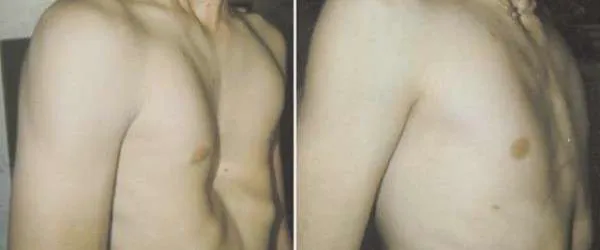
A front chest wall that protrudes outward is called pectus carinatum, or pigeon chest. It is a developmental anomaly, meaning it is not actually a disease; it forms when the ribs push the breastbone (sternum) outward as they grow. The front of the chest sticks out.
It becomes noticeable especially during the growth spurt of adolescence. It is more visible in thin people. It can affect a person's social life and emotional well-being. These individuals may feel uncomfortable going to the beach or the pool, or with the appearance of their chest.
Pigeon chest causes only a cosmetic concern and is not a medical problem; if the person and their family wish, it can be treated with surgery.
What is funnel chest?
A front chest wall that is sunken inward is called pectus excavatum, or funnel chest. This chest wall anomaly is often only a cosmetic problem, but when the front of the chest is turned inward to a severe degree, it can press on organs such as the heart and lungs and impair their function. In addition, children with this deformity may feel embarrassed by it, may feel uncomfortable socially, and may also experience psychological difficulties. Whether for cosmetic reasons or when there is serious pressure on the heart and lungs, this deformity needs to be corrected with surgery. Childhood and early adolescence (ages 10-15) are the more suitable ages for surgery.
What are the other chest wall deformities?
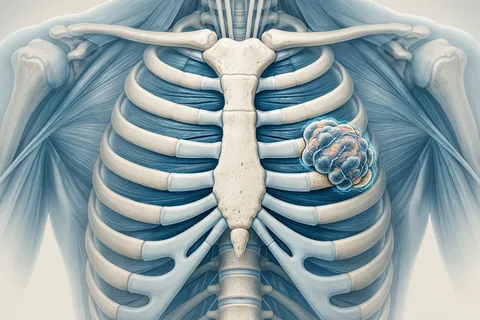
There may be cases we call asymmetric pectus, in which one side of the front of the rib cage protrudes and the other side is sunken. Treatment is somewhat more complex.
There may also be a condition in which the breastbone has not developed properly (sternal cleft), or anomalies in which some ribs, cartilage or muscles at the front of the chest have not developed well. Surgery is rarely needed for these.
 Until 10-15 years ago, pectus operations were performed with the open method; in recent years, they are mostly performed with the closed method known as minimally invasive surgery.
How are chest wall anomalies corrected?
Chest wall anomalies known as pigeon chest or funnel chest are corrected with "pectus" operations.
Until 10-15 years ago, pectus operations were performed with the open method; in recent years, they are mostly performed with the closed method known as minimally invasive surgery.
In the open method, the deformed ribs are partially cut and corrected, the breastbone is also cut and brought into its normal position, and it is held in this position with a metal bar placed beneath it. Although it is a more controlled method, it leaves more scarring and is therefore less favorable cosmetically. There may be some pain after surgery. Complex chest wall deformities need to be treated this way.
What is endoscopic chest wall surgery?
Pectus operations can also be performed with the closed method. In the closed method, the deformity at the front of the chest is corrected with a metal bar placed under or over the breastbone with the help of endoscopy. It is an operation that requires experience. Correcting a chest wall anomaly with the closed method takes less time, and patients are left with less scarring after the operation. Pain in the early period after surgery may be somewhat greater than with open surgery.
In both types of surgery, the metal bars need to be removed within 6 months to 3 years.
What should be considered after pectus surgery?
The ideal age for pectus surgery is 12-15. After surgery, patients need to avoid contact sports in particular for a few months. Long-term pain is very rare.
Can a chest wall anomaly come back?
Results after pectus surgery are generally satisfactory. Recurrence is very rare, especially after a bar placed under the sternum has been removed.

Prof. Dr. Erdal Okur · Thoracic Surgery
BiographyDo you have a question about this topic? Ask a question