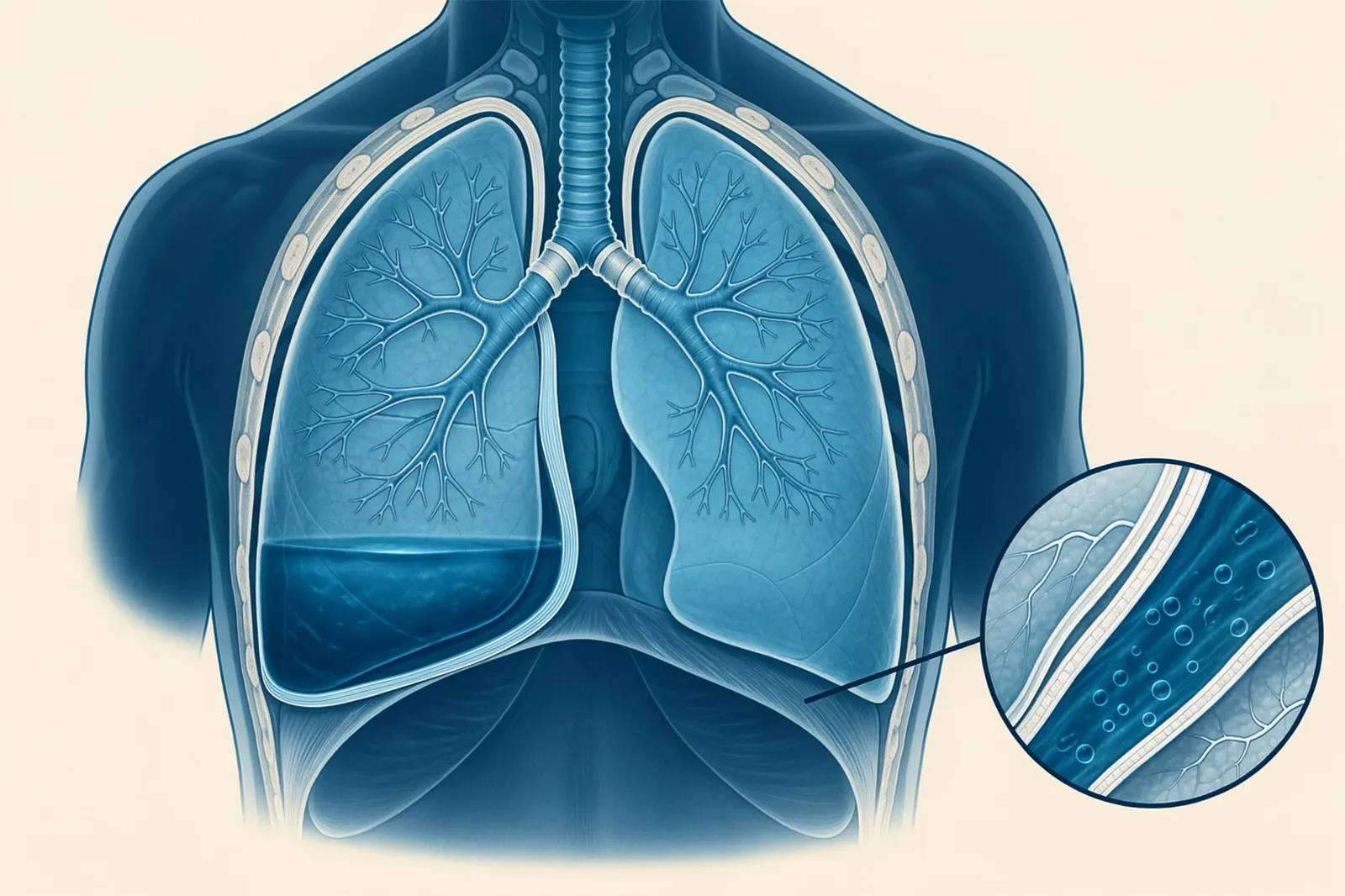
The pleura has two layers: the "visceral pleura," which covers the entire outer surface of the lung, and the "parietal pleura," which covers the inner surface of the chest wall, the mediastinum and the surface of the diaphragm.
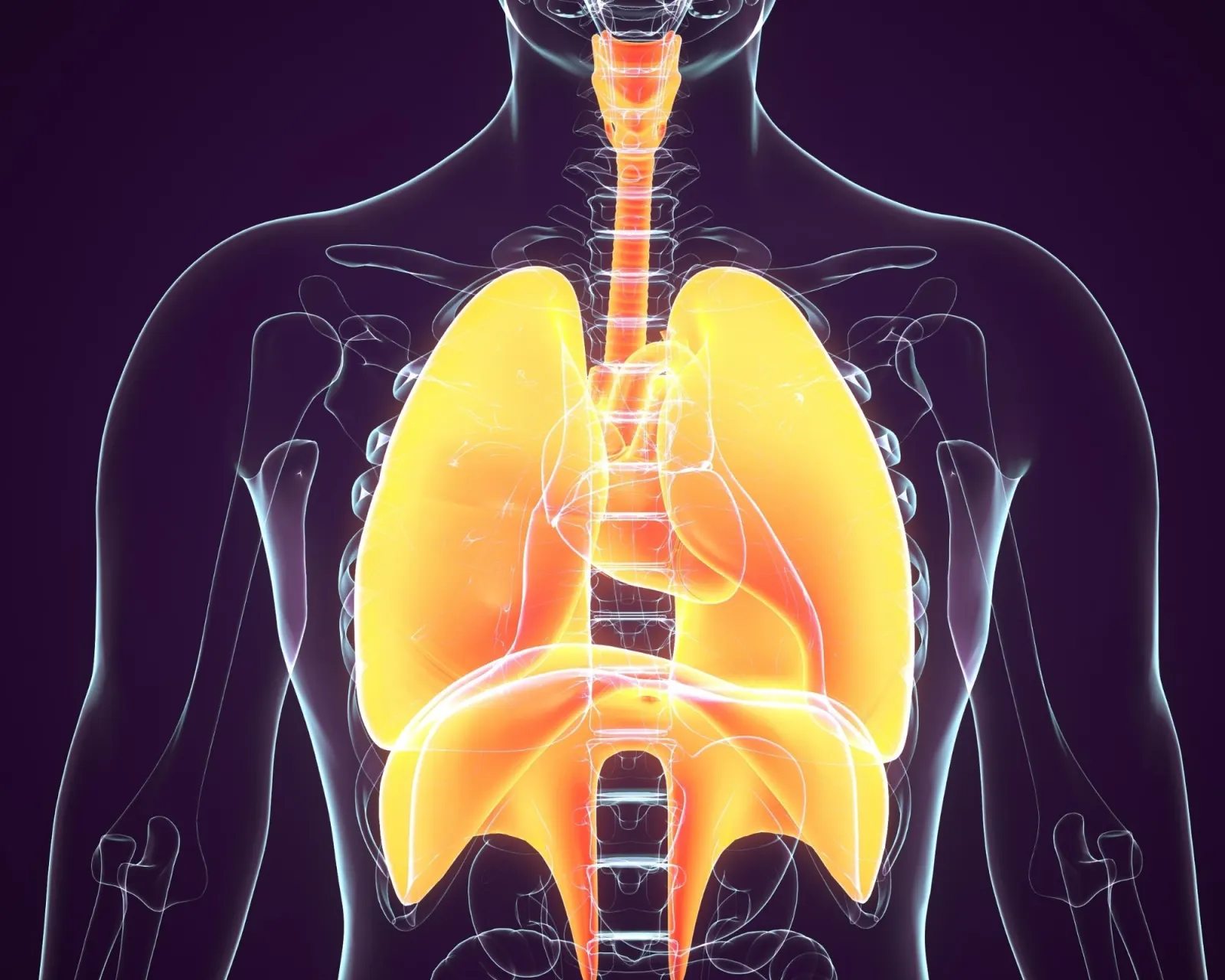
The membrane we call the pleura is actually an organ in its own right. It basically consists of two parts (also called two layers). The first is the "visceral pleura," which covers the entire outer surface of the lung, and the other is the "parietal pleura," which covers the inner surface of the chest wall, the mediastinum and the surface of the diaphragm. These two parts of the pleura are connected at the root of the lung, which we call the hilum, and together form a closed sac. Normally there is a very small amount of fluid inside this pleural sac, and this fluid allows the lung to move freely inside the chest wall during breathing.
What are the causes of pleural effusion? Why does fluid collect in the lungs?
What is known as "fluid in the lung" is actually fluid collecting between the layers of the pleura. It is called pleural fluid or pleural effusion. Because the lung has a sponge-like structure with no distinct cavity inside, there is no space within it for fluid to collect. Inside the lung, only a condition we call pulmonary edema can occur (like a sponge holding water), which is completely different from pleural fluid.
Fluid can collect in the pleura in lung diseases, and it can also collect in the pleura because of many causes outside the lung. The main lung-related causes of pleural fluid are:
- infectious diseases of the lung (pneumonia, tuberculosis),
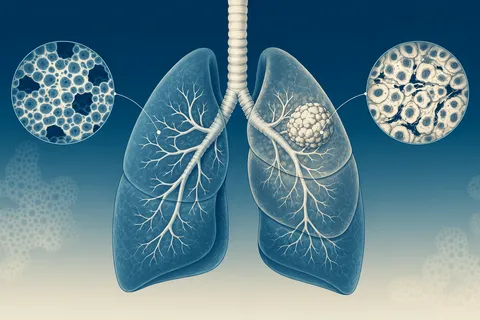
- malignancy in the lung, and
- some other rare diseases of lung tissue. In fact, pleural fluid due to causes outside the lung is much more common. Fluid collection in the pleura (pleural effusion) can be seen in many diseases of the heart, kidneys and liver, in protein imbalance in the blood, or as metastasis to the pleura from any cancer in the body.
Is pleural effusion dangerous? What are the symptoms of pleural effusion?
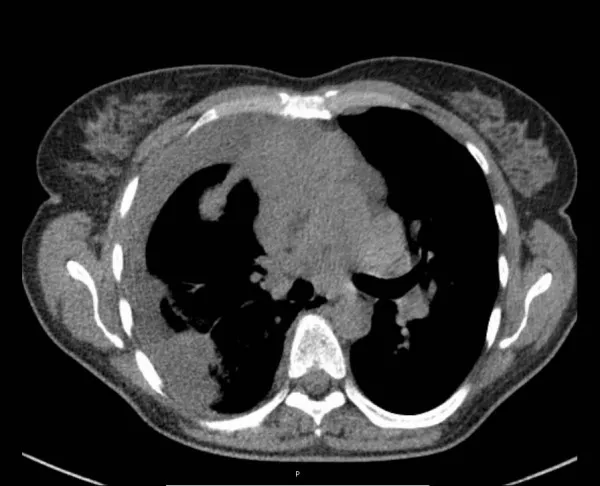
Fluid collection in the pleura is important in two ways.
First, there is an underlying disorder causing this fluid to collect; in other words, pleural fluid is the result of a disease. For this reason, it alerts us to treat the disease that is causing it.
The other important reason is that when fluid collects in the pleura, because the chest cavity is a closed cage, the fluid will press on the lung (and partly on other organs inside the chest cavity), causing the lung to collapse and preventing it from expanding well. As a result, patients will develop symptoms such as:
- shortness of breath,
- dull chest pain, and
- tiring easily.
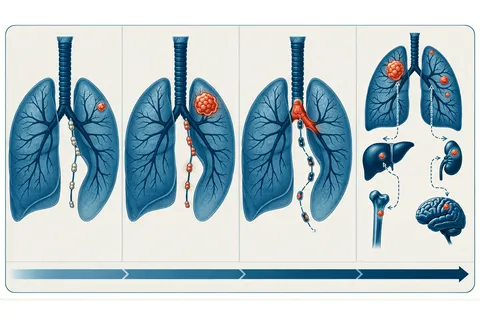
Another situation is that in malignant diseases of the lung or certain other organs (breast, lymphatic system, etc.), malignant fluid may collect in the pleura, and in this case it can cause serious shortness of breath.
Can pleural effusion be treated?
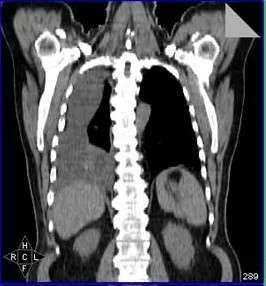
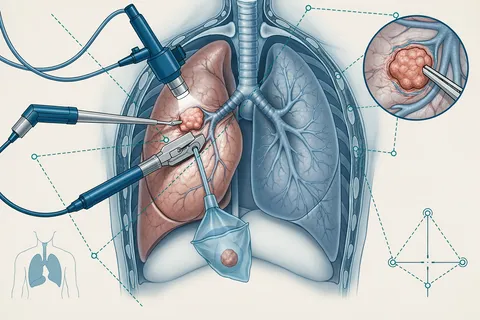
When fluid collects in the pleura, depending on the underlying disease, the aim is to make the fluid regress and resolve with medical treatment whenever possible. Most pleural effusions are resolved with medication. However, both in malignant diseases and in some benign diseases that do not improve with other treatments, when a large amount of fluid collects in the pleura, it may need to be emptied (drained) with a surgical procedure. For this purpose, drains of various sizes, from thin to thick, may need to be placed in the pleural space. Especially when a malignant effusion is involved, fluid collections can be very persistent, and treating them can be truly difficult. In such cases, the pleura can be stripped and/or the pleural layers can be fused together (pleurodesis) with endoscopic (VATS) methods.
When infected (inflamed) fluid collects in the pleura, draining this fluid will also be necessary in addition to antibiotic treatment.
Does pleural effusion come back?
As long as the disorder causing the pleural effusion is not treated, the fluid will collect again after a while, even if it has been drained from the pleura. For this reason, it is essential first to treat the disease causing the pleural fluid. Because pleural effusion due to malignant causes also tends to recur, surgical procedures to prevent recurrence may be necessary.
What surgical procedures can be performed for pleural effusion?
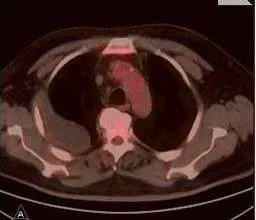
- Drainage with a thin (millimeter-wide) catheter,
- Placement of thicker chest tubes into the pleural space,
- Stripping of the pleura (pleurectomy) or fusing the pleural layers together (so that no space is left for fluid to collect in the pleura) with video-assisted thoracoscopic methods,
- Indwelling pleural catheters can be placed for pleural fluid that does not resolve and keeps coming back.
FREQUENTLY ASKED QUESTIONS
Is fluid buildup in the lung fatal?
There are dozens of different causes of fluid buildup in the lung. Some of them may be symptoms or complications of very serious diseases. Fluid buildup in the lung may be caused by diseases of the lung or the pleura itself, and it may also originate from other organs (kidney, heart, liver, lymphatic system, blood diseases, etc.). Depending on the cause, it may be a more serious condition.
How long does treatment of fluid buildup in the lung take?
Depending on the cause of the fluid and the effectiveness of the treatment, fluid buildup in the lung may resolve or may be permanent. Sometimes it does not resolve on its own unless it is drained with a procedure.
Does fluid buildup in the lung come back?
Fluid buildup in the lung can recur depending on both its cause and the effectiveness of treatment. Fluid in the lung due to cancer will recur in most cases.
What should be considered in the treatment of fluid buildup in the lung?
First, the exact cause of the fluid collection should be identified, and it should be expected to resolve with appropriate medical treatment. Some large fluid collections that cause shortness of breath may need to be drained. Fluid due to heart, kidney or liver failure will improve with treatment of the primary disease, so draining it is not appropriate.
What is bilateral pleural effusion?
Bilateral pleural effusion is fluid collecting in the pleura of both lungs. It is generally seen in diseases outside the lung, such as heart, kidney or liver failure.
At what stage of lung cancer does fluid collect in the lung?
In lung cancer, fluid containing cancer cells collecting in the pleura is seen in the advanced stage of the disease, that is, stage 4.
What should patients pay attention to after treatment of fluid buildup in the lung?
Many diseases can cause fluid buildup in the lung. The disease causing this fluid buildup should be fully treated, and check-ups should be done at intervals as recommended by the physician.

Prof. Dr. Erdal Okur · Thoracic Surgery
BiographyDo you have a question about this topic? Ask a question