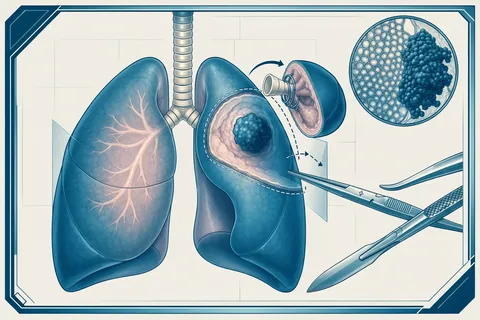
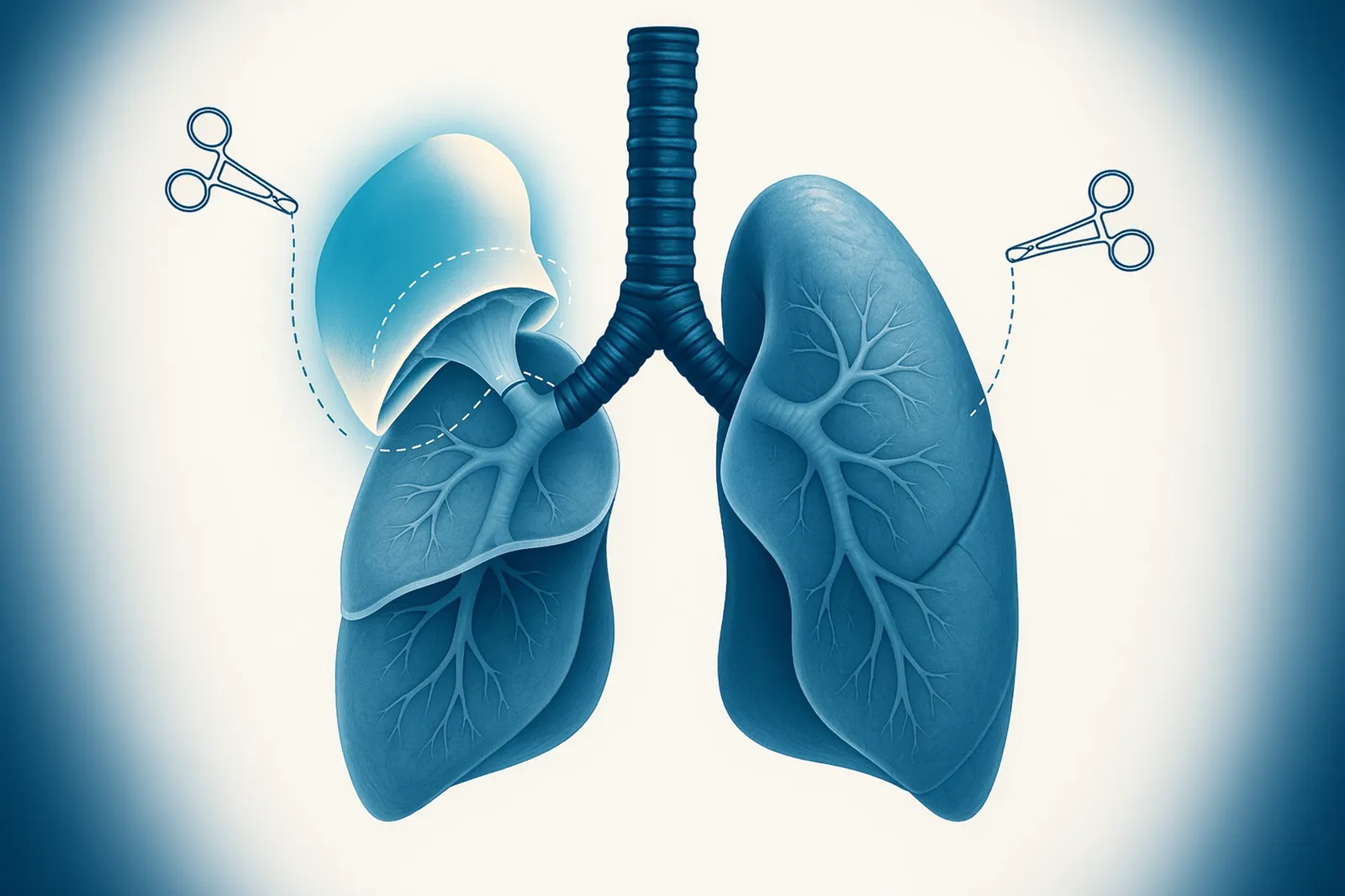
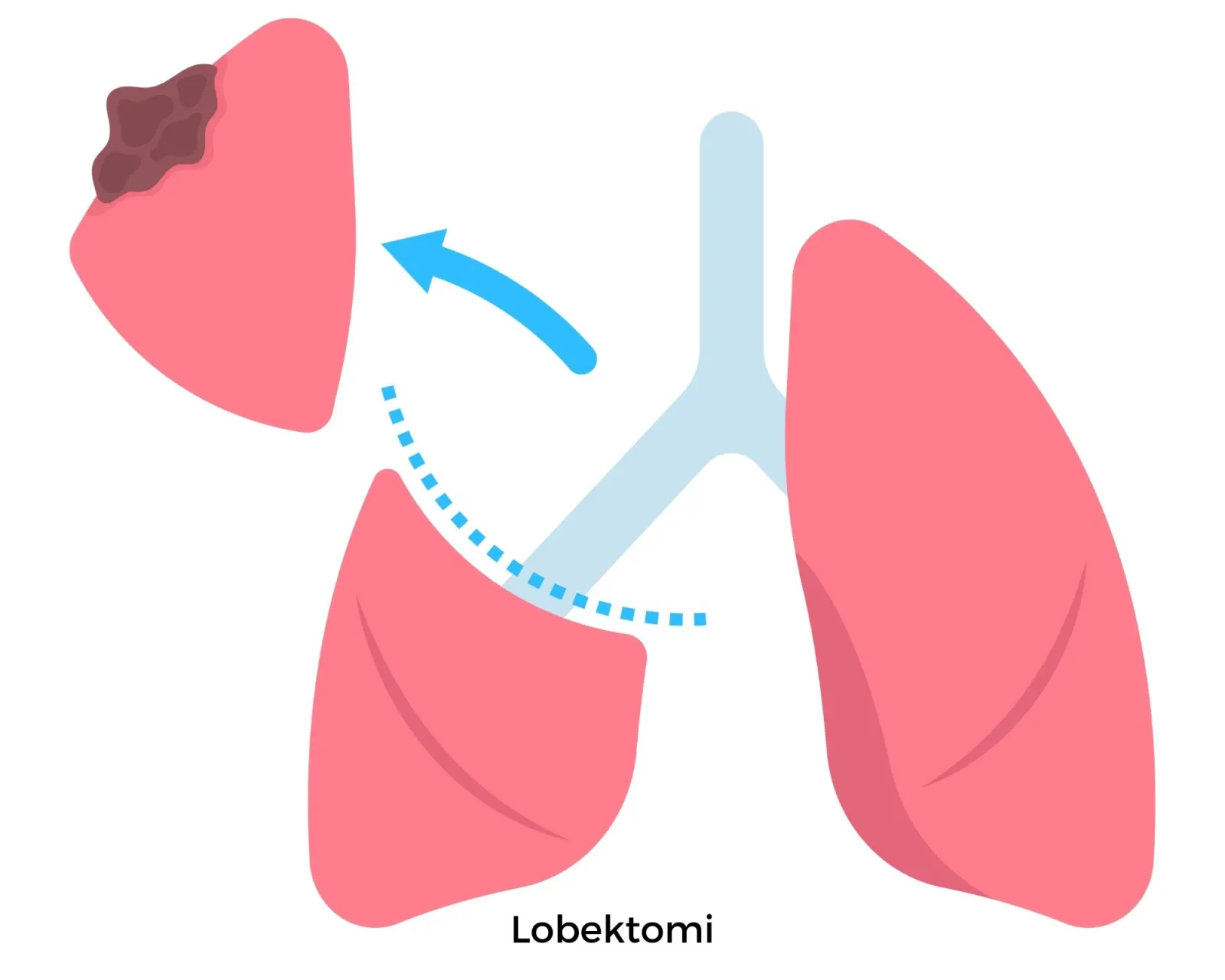
Lobectomy is a surgical procedure in which an entire lobe of the lung is removed for various reasons, such as lung cancer and other tumors and, rarely, certain chronic infections (tuberculosis, bronchiectasis).
How is lobectomy performed?
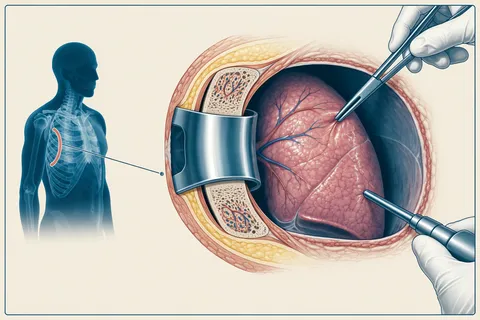
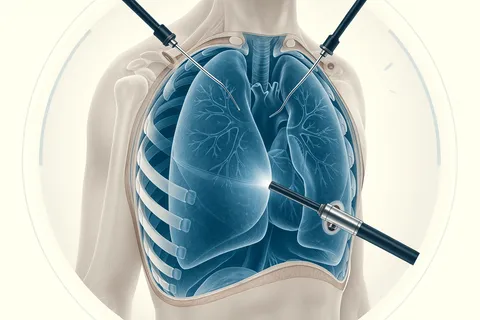
The right lung has three lobes and the left lung has two. Depending on the patient's diagnosis, lobectomy can be performed with a minimally invasive method through one or several small incisions in the chest, or as open surgery through a longer thoracotomy incision. In both approaches, nearby lymph nodes may also be removed along with the lobe to reduce the risk of possible spread of the disease or cancer.
What is done before lobectomy?
Before a lobectomy, the surgeon takes the patient's history and performs a physical examination, and blood and pulmonary function tests are also done. Depending on age and physical condition, further tests may be recommended. Patients who smoke are advised to quit smoking to minimize the risks of surgery.
Lobectomy, performed under general anesthesia, is frequently carried out in experienced centers by experienced surgeons, usually with the closed method and with the Single-Port VATS method.
After surgery, the patient's recovery varies depending on the surgeon's preferences and the patient's condition, and a hospital stay of two to four days is usually needed. During recovery, the patient is encouraged to move, breathe deeply and cough, and pain can usually be controlled with medication. Most patients can return to their normal daily routines within a week after surgery.
Does breathing capacity decrease after lobectomy?
Patients undergo pulmonary function tests before lobectomy. Using the test results, the breathing capacity that will be lost after lobectomy is calculated. Therefore, lobectomy is not performed in patients whose breathing capacity is expected to drop to a level that would put their life at risk.
Patients who have had a lobectomy can usually continue their lives after surgery without significant limitations.
What are the risks after lobectomy?
Like all surgical procedures, lobectomy can involve risks. The main ones are bleeding and infection.
To prevent infection, preventive (prophylactic) antibiotic treatment is started during and after surgery. The risk of bleeding can be reduced with Single-Port VATS, that is, closed lung surgery performed through a single incision. The very small surgical area also lowers the risk of bleeding.
Rarely, minor complications such as an air leak from the lung may occur, but this usually heals on its own.

Prof. Dr. Erdal Okur · Thoracic Surgery
BiographyDo you have a question about this topic? Ask a question