The lung can have certain congenital diseases. These diseases may appear at birth or during infancy, while some may go unnoticed in infancy because they cause no symptoms or signs.

The lung can have certain congenital diseases. These diseases may appear at birth or during infancy, while some may go unnoticed in infancy because they cause no symptoms or signs, and are only noticed later in life when complications related to these diseases develop.
What is congenital cystic adenomatoid malformation?
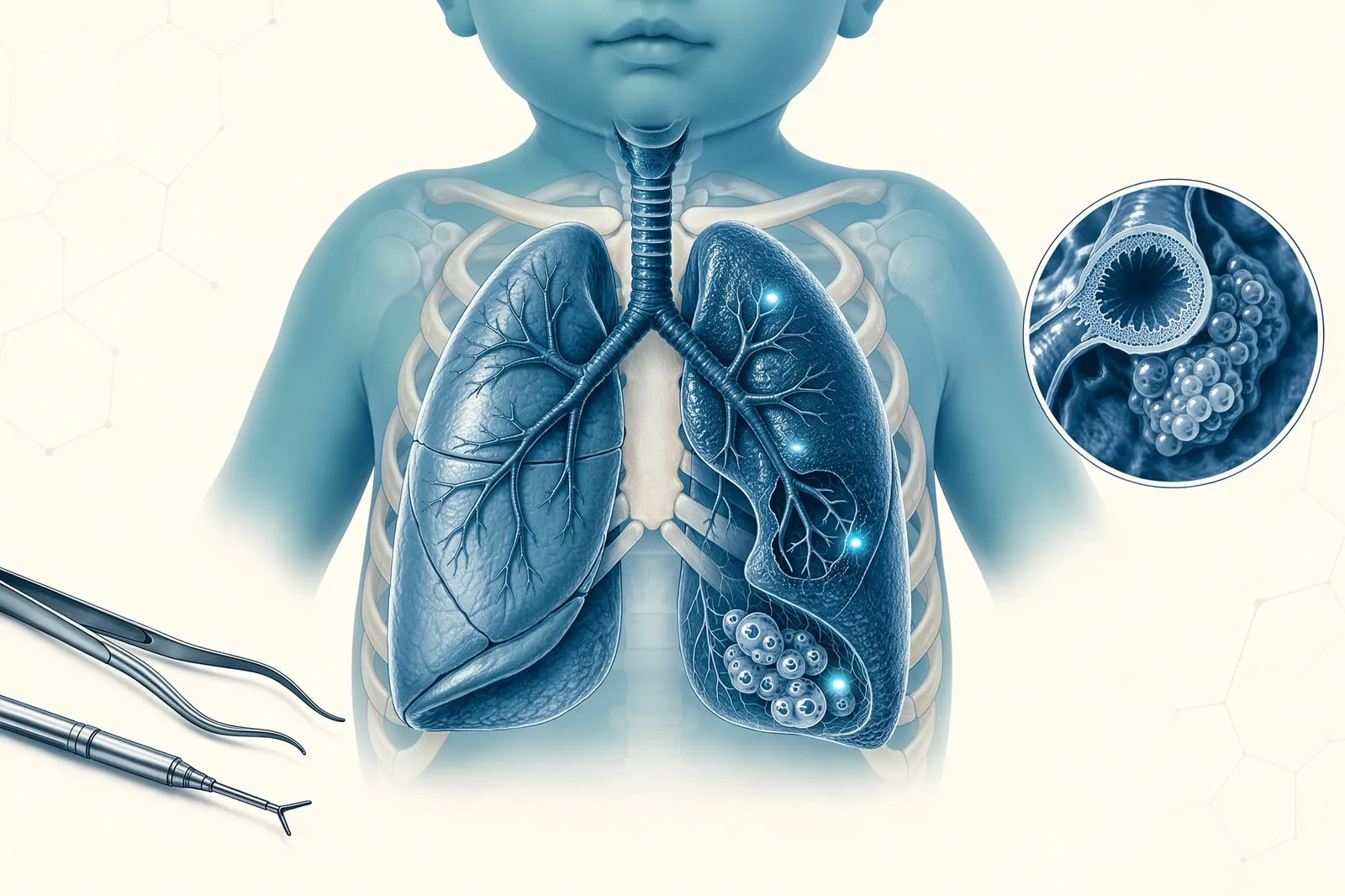
Congenital cystic adenomatoid malformation (CCAM), also called congenital pulmonary airway malformation (CPAM), is a congenital disease. It is usually noticed in early infancy. In this disease, the affected areas of the lung show abnormalities that are cystic and sometimes solid, which we call adenomatoid, or combinations of these in different proportions. These areas can be large, press on the healthy parts of the lung and adversely affect the development of the healthy lung. In addition, the form called adenomatoid has the potential to turn into a malignant tumor. When the disease affects a small part of the lung, it causes very few signs and may be found incidentally on imaging before or after birth. When the disease affects larger areas, there may be signs such as shortness of breath and breathing problems.
When congenital cystic adenomatoid malformation is diagnosed, surgery is needed to remove the part of the lung affected by the disease. If the baby has widespread symptoms, surgery should be performed without waiting for the baby to grow. For babies without symptoms, it may be possible to wait for them to grow somewhat and then have surgery.
What is congenital lobar emphysema?
In congenital lobar emphysema, another congenital lung disease, one lobe of the lung has widespread emphysema and this part is completely filled with air cysts. This lobe, which is quite large in volume, presses inside the chest both on the healthy lung areas on the same side and, by pushing the midline to the opposite side, on the other lung, preventing the healthy lung from functioning normally. The upper lobe of the left lung is usually affected. The baby may develop shortness of breath at birth.
Today, these diseases can be diagnosed even while the baby is in the womb, and this potentially dangerous situation can be prevented with prompt intervention after birth if necessary. Depending on the baby's clinical condition, emergency surgery may be needed, or if the baby is stable, it may be possible to wait for the baby to grow for a while. Afterwards, the affected lung lobe is removed with surgery.
What is pulmonary sequestration?
Sequestration is a congenital condition in which abnormal tissue with a blood supply different from that of the lungs is present within the lung tissue or at the edge of the lung inside the chest cavity. Sometimes it can be noticed in infancy (shortness of breath, feeding problems), but it is usually noticed and diagnosed later in life, incidentally or when problems such as infection develop.
Treatment is surgical removal of the tissue called the sequestrum. In sequestration inside the lung, it is removed together with the affected part of the lung; when it is next to the lung, removing only the sequestration itself is sufficient.
What is a bronchogenic cyst?
These are mucus-filled cysts located next to the airways. Sometimes they grow next to the main bronchi and sometimes into the lung. Although they are congenital, they are usually noticed later in life. They become infected and cause symptoms. They are removed with surgery.
How is surgery performed in congenital lung diseases?
In these diseases, the decision is made jointly by the pediatrician and the surgeon, taking into account criteria such as the patient's clinical condition, the severity of the disease and the symptoms. Emergency surgery may be needed in a newborn, or it may be possible to wait for the baby to develop and grow somewhat, or in some cases to follow the baby up.
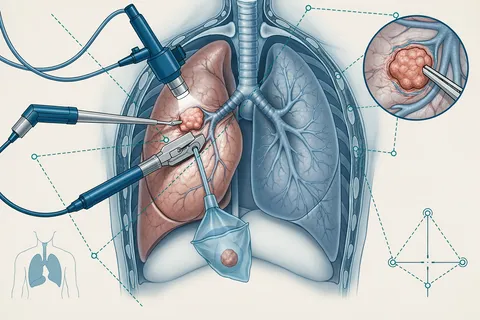
Depending on the patient's age and the state of the disease, the surgical method may be open surgery or the video-assisted thoracoscopic method (VATS).
Videos

Lung surgery on an 11-month-old baby

Prof. Dr. Erdal Okur · Thoracic Surgery
BiographyDo you have a question about this topic? Ask a question