What is thoracoscopy?
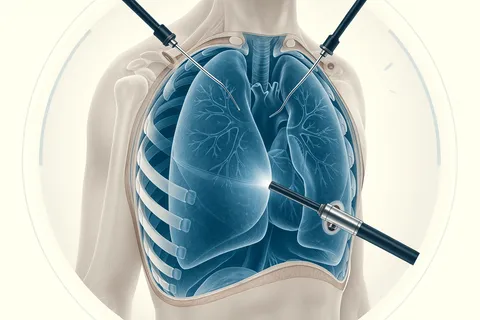
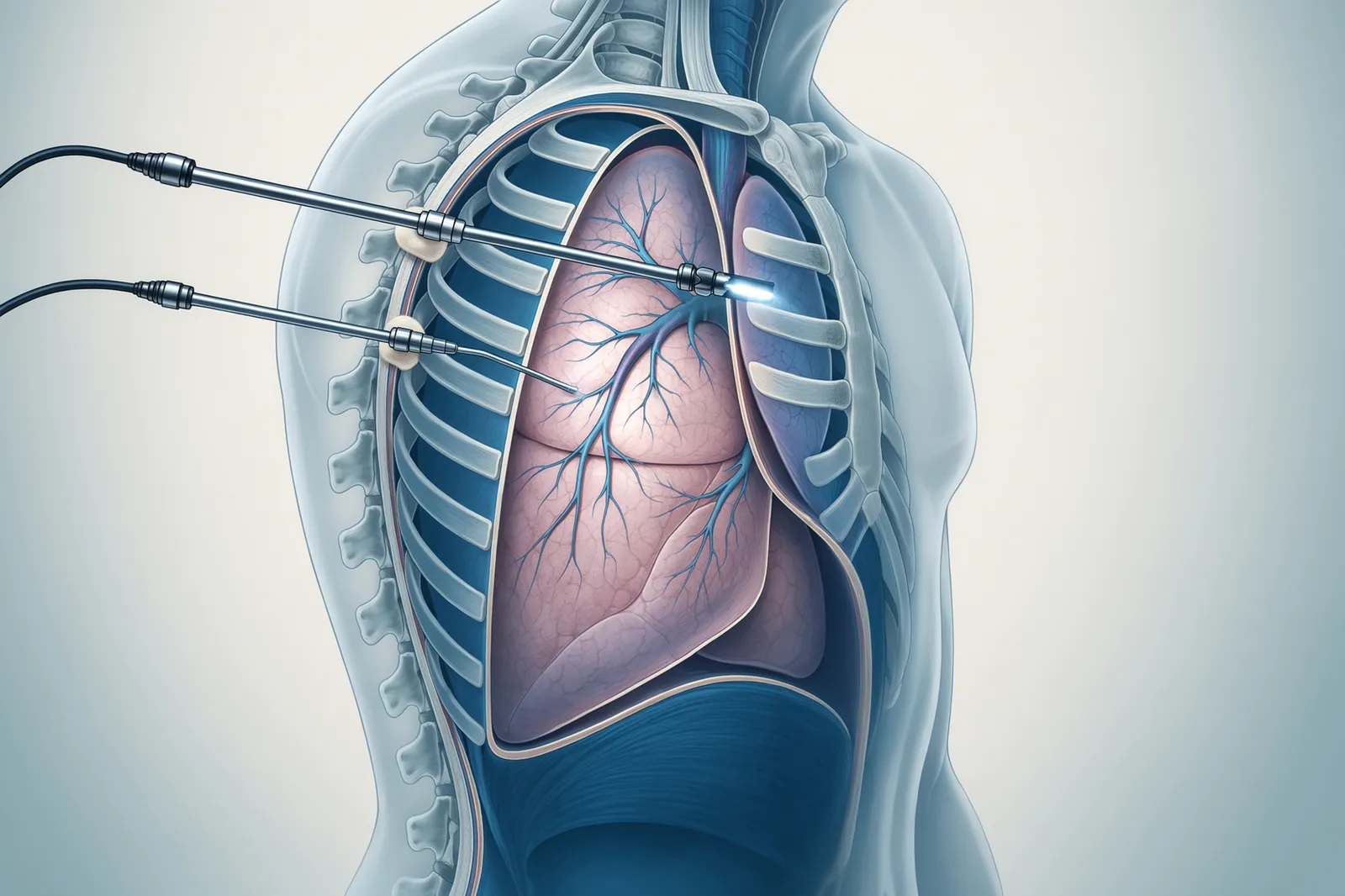
Thoracoscopy is a surgical procedure used to examine the chest cavity or to perform surgical procedures. In this method, a thin tube called a thoracoscope, with a camera at its tip and an image transmission system inside, is placed into the chest cavity. The thoracoscope is inserted into the chest wall through a small incision or through a thin tube called a trocar.
Why is thoracoscopy performed?
Thoracoscopy is used for two main purposes:
Diagnostic Thoracoscopy: Used to diagnose diseases or abnormalities of the organs or tissues inside the chest. Through the thoracoscope, the surgeon sees the inside of the chest cavity directly on a screen and performs diagnostic procedures such as taking a biopsy or draining fluid.
Surgical Thoracoscopy: Used to perform surgical procedures inside the chest.
Depending on the type of operation, thoracoscopy can be used to remove or repair organs or to carry out other surgical procedures. For example, it can be used for operations such as removing lung cancer or repairing a pneumothorax.
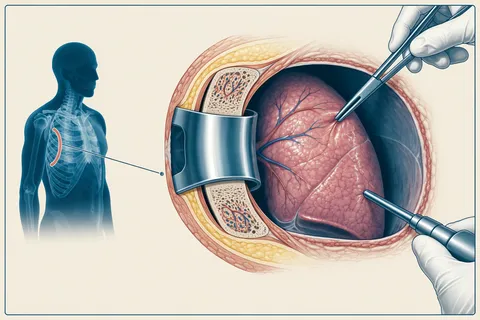
Thoracoscopy leaves fewer and smaller scars than traditional open surgery. Recovery is faster. However, the purpose of the procedure and how it is used vary depending on the patient's particular situation and surgical needs. For this reason, a thoracoscopy procedure should be carefully evaluated beforehand.
How is thoracoscopy performed?
Making the Incisions: Small incisions (ports) are made to access the chest cavity.
The camera, called a thoracoscope, is inserted through one of the incisions.
Surgical Procedure: The thoracoscope is used to perform the surgical procedure or to examine the inside of the chest. Depending on the type of operation, a lung biopsy, pneumothorax repair or other surgical procedures are performed.
Closing the Incisions: When the procedure is complete, the incisions are usually closed with stitches or adhesive strips.
The patient is kept under observation for a while after surgery, and a drain may be placed to prevent air or fluid from building up in the chest cavity.
The recovery process may vary depending on the type of operation and the patient's health.
Follow-up and doctor check-ups are carried out regularly. These check-ups are important for monitoring recovery.
The patient should follow the doctor's recommendations, rest, take care of the wounds and take medications regularly.
What are the indications for thoracoscopy, and who is it for?
Thoracoscopy can be used for diagnosis and treatment in the following situations.
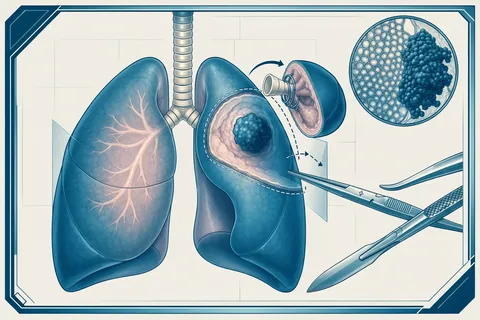
Lung Cancer: Thoracoscopy is used to diagnose and treat lung cancer.
It can be used to assess the spread of the cancer, take a biopsy or remove cancerous tissue.
Pneumothorax: Pneumothorax is a condition in which a rupture on the surface of the lung causes free air to collect in the chest cavity, leading the lung to collapse. Thoracoscopy can be used to determine the cause of the pneumothorax and treat it.
Pleural Effusion: Thoracoscopy can be performed to diagnose pleural effusion, which causes fluid to build up in the chest cavity, and to drain the fluid.
Mediastinal Cysts or Tumors: Thoracoscopy can be used to remove or biopsy cysts or tumors in the mediastinum (the area in the middle of the chest cavity).
Pleural Biopsy: A biopsy of the lining of the chest (pleura) can be performed with thoracoscopy to diagnose abnormal cells or tissues in the chest cavity.
Pulmonary Bulla (Air Cyst): Thoracoscopy can be performed to remove large pulmonary bullae (air-filled cysts in the lung).
Who undergoes the procedure may vary depending on the patient's symptoms, the condition that needs to be diagnosed and whether surgical intervention is necessary. Because thoracoscopy is usually a less invasive option, it offers faster recovery and leaves smaller scars than traditional open surgery. It is important for patients to have a detailed evaluation with their doctor to determine whether the operation is suitable.
How long does recovery take after thoracoscopic surgery?
You can return to normal activities within two weeks after thoracoscopy. Full recovery usually takes four to six weeks.
What are the advantages of thoracoscopic surgery?
Fewer Scars and Less Pain: Thoracoscopic operations are performed through smaller incisions than traditional open surgery. As a result, patients are left with smaller scars and have less pain after surgery.
Faster Recovery: Thoracoscopic operations are generally associated with faster recovery. Patients can return to their normal activities more quickly after a shorter hospital stay.
Less Blood Loss: Thoracoscopic operations tend to cause less blood loss than traditional surgery.
Lower Risk of Infection: Using small incisions may reduce the risk of infection, because the incisions are easier to care for.
Fewer Complications: Thoracoscopic operations generally lead to fewer complications than traditional open surgery. They may be a safer option, especially for older patients or those with more health problems.
Shorter Hospital Stay: Thoracoscopic operations require patients to stay in the hospital for a shorter time, which may reduce hospital costs.

Prof. Dr. Erdal Okur · Thoracic Surgery
BiographyDo you have a question about this topic? Ask a question