What is the diaphragm? What does the diaphragm do?
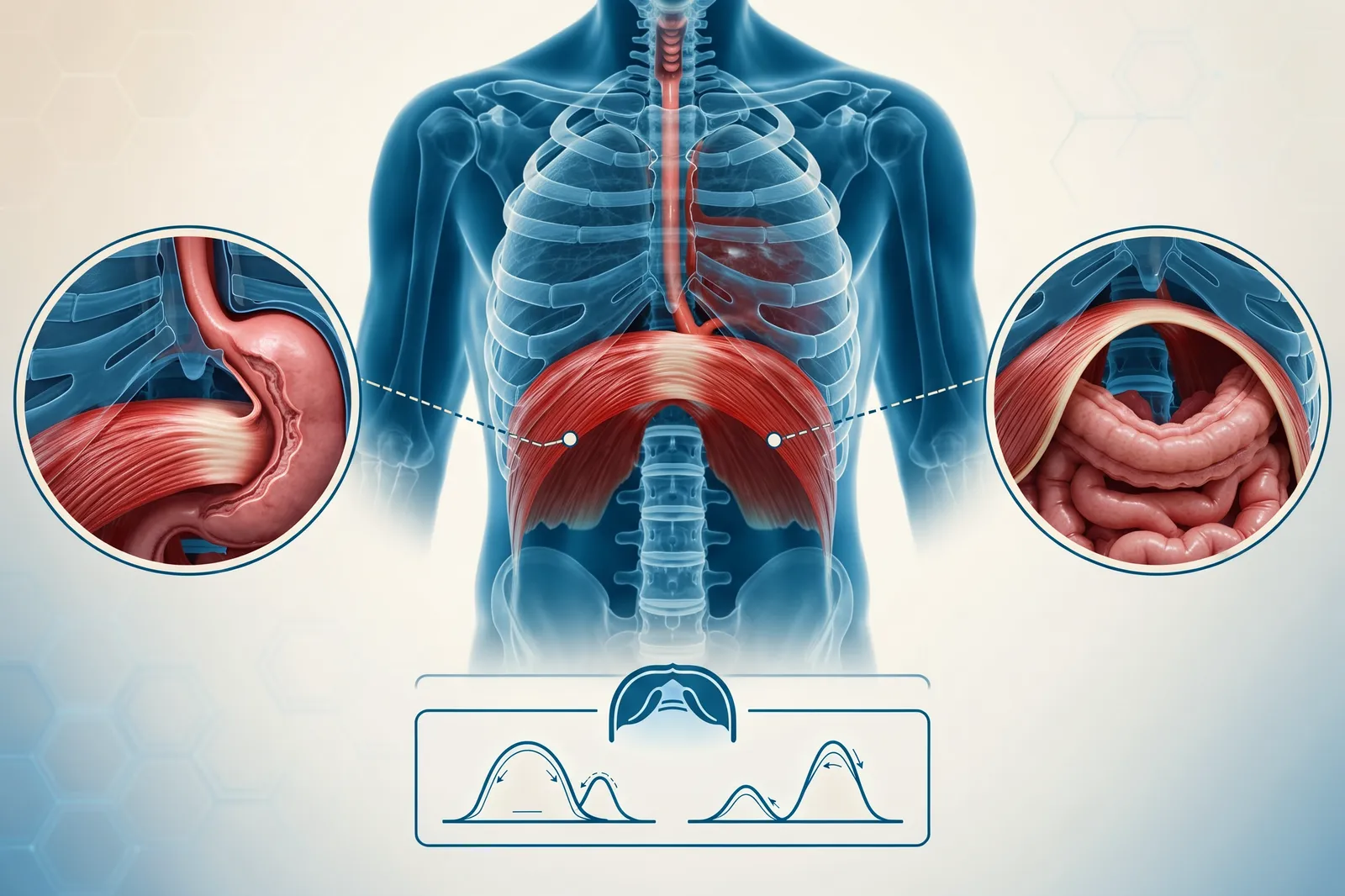
The diaphragm is a broad sheet of muscle located between the chest cavity and the abdominal cavity, separating the two. It is at the center of breathing: when you breathe in, it contracts and moves downward, increasing the volume of the chest cavity and allowing the lungs to expand more easily. When you breathe out, it relaxes and rises, helping push air out of the lungs. For this reason, the diaphragm is considered the most important breathing muscle in the human body.
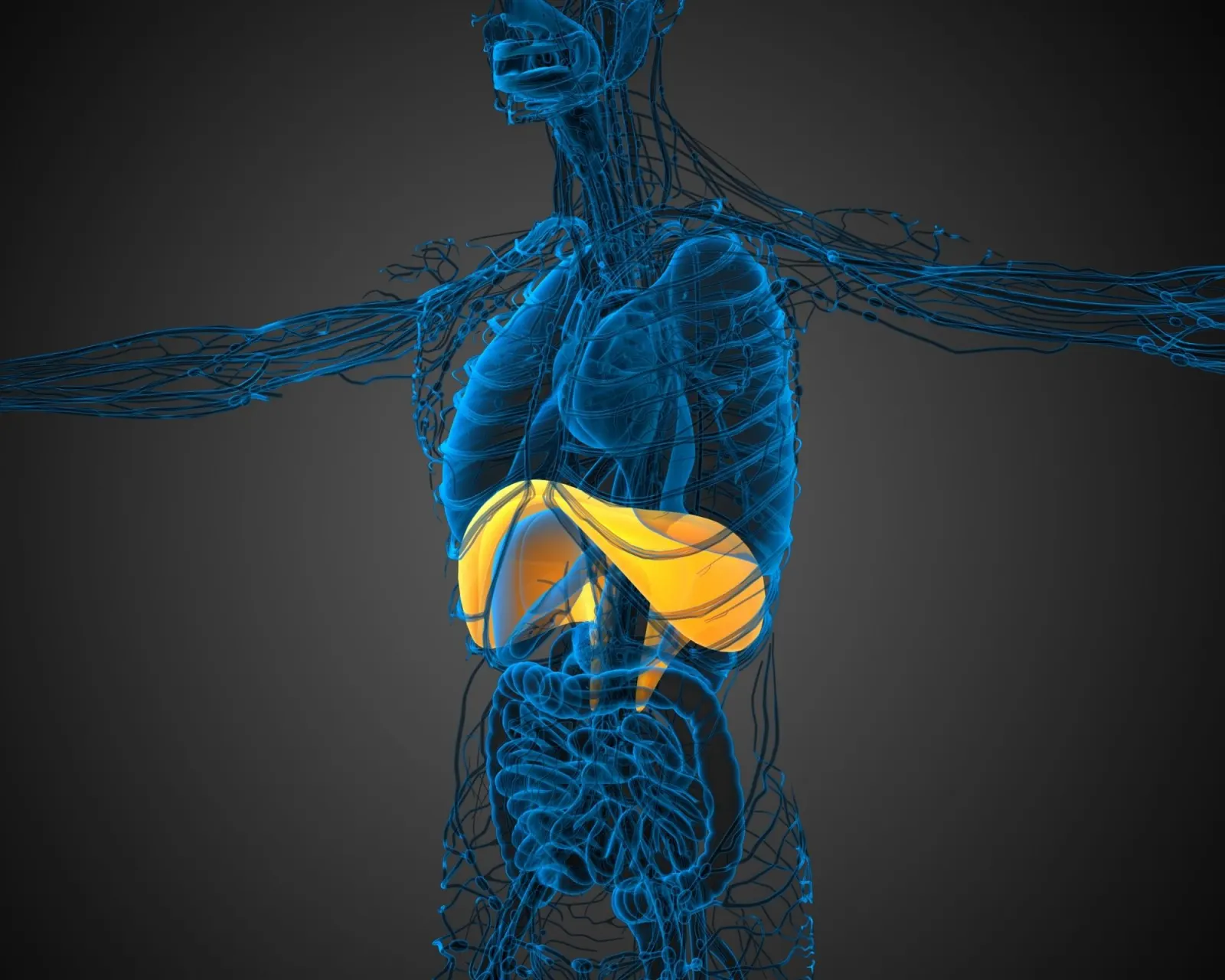
Proper function of the diaphragm matters not only for comfortable breathing but also for exercise capacity, sleep quality and not tiring quickly during daily activities.
The diaphragm also plays a role in controlling pressure inside the abdomen. Because pressure in the abdomen is naturally higher than pressure in the chest, the diaphragm also acts as a "barrier" that keeps the abdominal organs from shifting into the chest cavity. When this barrier has an opening present from birth, a weakness that develops over time, or a tear caused by trauma, diaphragmatic hernias or ruptures may occur.
If the nerve that moves the diaphragm is affected, diaphragm paralysis can develop. In short, diaphragm diseases cover a wide clinical spectrum that can affect both breathing and the position of the organs in the chest and abdomen.
What are the diseases of the diaphragm?
The diaphragm diseases most commonly seen in clinical practice are diaphragm paralysis, diaphragmatic hernias and diaphragm ruptures.
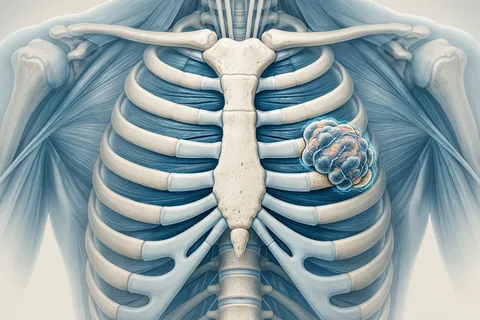
Diaphragm tumors are quite rare. What these conditions have in common is that either the movement of the diaphragm is impaired or its function as the "chest-abdomen barrier" is weakened. For this reason, symptoms usually center on shortness of breath and pain or a feeling of pressure in the lower chest and upper abdomen; however, the underlying cause and the type of disease determine the details of the complaints.
What are the symptoms of diaphragm diseases?
Because the diaphragm is the main breathing muscle, the most common symptom of diaphragm diseases is shortness of breath. Sometimes it appears only on exertion, such as when climbing stairs or walking fast; at other times it can become a picture that worsens when lying on the back, wakes the person at night, or even makes everyday conversation difficult.
Patients may describe it as "I can't take a deep breath," "my chest doesn't fill up" or "I run out of breath when I lie down." In diaphragmatic hernias, shortness of breath may be accompanied by fullness in the upper abdomen, discomfort after eating, a feeling of tightness in the chest and reflux-like complaints. In diaphragm ruptures, chest and abdominal pain, shortness of breath and sometimes digestive complaints may occur together with a history of trauma.
The severity of symptoms does not always match the size of the hernia or how high the diaphragm has risen. Sometimes a small problem causes no symptoms for a long time, while in people with an accompanying lung or heart disease, even a smaller diaphragm problem can cause marked shortness of breath. For this reason, how the complaints affect daily life, when they get worse and how long they have lasted are important in the diagnostic approach.
What is diaphragm paralysis?
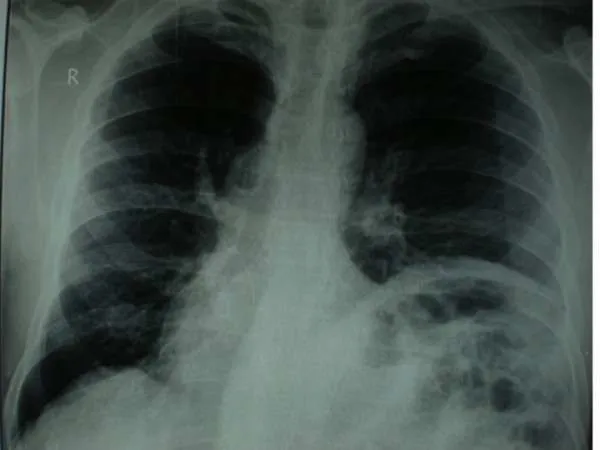
Diaphragm paralysis is a complete or partial loss of function of the diaphragm muscle caused by damage to the phrenic nerve, which controls the movement of the diaphragm. When one side of the diaphragm is paralyzed, the muscle on that side cannot contract adequately and may remain in a slack, raised position; this may be accompanied by "diaphragm elevation." In this situation, the diaphragm's contribution to breathing decreases, and the raised diaphragm may also press on the lung and keep it from expanding fully. As a result, the patient may experience shortness of breath, tiring quickly, reduced exercise capacity and, in some patients, breathing difficulty that gets worse when lying down.
What causes diaphragm paralysis?
The most common causes of diaphragm paralysis include injury to the nerve during surgical procedures, trauma, certain procedures involving the neck and chest, tumors pressing on the nerve, or certain neurological diseases. In some patients, however, no clear cause can be found, and the condition may be considered "idiopathic." Identifying the cause is important, because if there is a mass pressing on the nerve or another condition that needs treatment, the treatment plan is shaped accordingly.
How is diaphragm paralysis detected? How is it diagnosed?
In diaphragm paralysis, the first clue is usually that one side of the diaphragm appears high on imaging. A chest X-ray often guides the initial evaluation. For a more detailed assessment, a chest CT, ultrasound or fluoroscopic studies may be used.
Assessing the movement of the diaphragm is valuable in showing whether paralysis is present and to what degree. In some patients, pulmonary function tests are used to measure how breathing capacity is affected; these tests help with the treatment decision, especially in patients with significant complaints.
How is diaphragm paralysis treated?
Treatment of diaphragm paralysis is planned according to the patient's level of complaints and how much their quality of life is affected. In patients with mild complaints that do not noticeably affect daily life, follow-up and supportive approaches may be enough. However, if shortness of breath is significant, exercise capacity has dropped and daily life has become difficult, surgical treatment may be considered. The aim of this treatment is to fix the slack, raised diaphragm in a more suitable position to make room for the lung to expand. In suitable patients, these operations can now be performed with closed (endoscopic) methods, which helps reduce pain after surgery and makes recovery more comfortable. The treatment decision is made individually, by evaluating examination findings, imaging results and lung function together.
What is a diaphragmatic hernia?
A diaphragmatic hernia is the shifting of abdominal organs into the chest cavity through an opening or weakness in the diaphragm. Because pressure in the abdomen is higher than in the chest, when a "passageway" forms in the diaphragm, organs may gradually move upward through it. This can narrow the space the lungs have to expand and lead to shortness of breath; pain, a feeling of pressure and digestive complaints may also occur due to the displaced organs.
What causes a diaphragmatic hernia?
Diaphragmatic hernias can be congenital (present from birth) or acquired. Congenital hernias are sometimes noticed in infancy because of severe breathing difficulty, while some types appear at later ages, either incidentally or when complaints begin. Among congenital hernias, one of the best-known types is the Bochdalek hernia, while the Morgagni hernia is another congenital type that may cause symptoms at later ages. Acquired hernias usually develop when a trauma-related diaphragm rupture turns into a hernia over time, or when the natural openings in the diaphragm widen.
At this point, one of the best-known types of diaphragmatic hernia among the public is the hiatal hernia, often called a "stomach hernia." When the opening through which the esophagus passes through the diaphragm widens over time, part of the stomach may shift into the chest cavity. In this condition, complaints such as reflux, heartburn, a bitter taste in the mouth and bloating after meals may be as prominent as shortness of breath, or more so.
What are the symptoms of a diaphragmatic hernia?
Symptoms of a diaphragmatic hernia vary depending on the type of hernia and how much of the organs have shifted into the chest cavity. Shortness of breath, especially breathing difficulty that worsens with exertion, is among the most common complaints. In addition, pain or a feeling of pressure in the lower chest and upper abdomen, discomfort after eating, feeling full early, and sometimes nausea and reflux may occur. In a hiatal hernia, complaints caused by stomach acid flowing upward may be more prominent; in some patients, a chronic cough, hoarseness or a burning sensation in the throat related to reflux may also be part of the picture.
Is a stomach hernia the same as a diaphragmatic hernia?
A stomach hernia (hiatal hernia) is technically a subtype of diaphragmatic hernia; however, the term diaphragmatic hernia is broader and also includes congenital hernias, trauma-related hernias and hernias that develop through other openings in the diaphragm. In a hiatal hernia, the main problem is often reflux, while in large traumatic or congenital hernias, shortness of breath and chest-abdominal pain due to displaced organs may be more dominant. This distinction matters when planning treatment.
What is a diaphragm rupture? How is a diaphragm rupture detected?
A diaphragm rupture usually occurs after blunt trauma (such as a traffic accident or a fall from a height) or penetrating injuries from sharp objects. It may cause symptoms right after the trauma, or, if the tear is small and widens over time, it may show up months or even years later as a hernia. Complaints related to a diaphragm rupture may include shortness of breath, chest and upper abdominal pain, discomfort that increases after eating and, sometimes, digestive complaints caused by the intestines shifting into the chest cavity. For diagnosis, the integrity of the diaphragm and the position of the organs are evaluated with X-ray, CT and, when needed, additional imaging methods.
Which doctor or department treats diaphragm diseases?
Because the diaphragm is anatomically related to the chest cavity, thoracic surgery often plays an important role in evaluation and in planning surgical treatment. Depending on the condition, however, other specialties such as gastroenterology, general surgery, pulmonology, cardiology and neurology may also need to contribute. In particular, a digestive system evaluation may be planned for hiatal hernia (stomach hernia) and reflux complaints, and nervous-system-related causes may be investigated when diaphragm paralysis is suspected.
How are diaphragmatic hernias treated?
Treatment of diaphragmatic hernias is determined by the location and size of the hernia, whether it is congenital or trauma-related, whether it is new or chronic, and the patient's level of complaints. The aim of surgical treatment is to return the organs that have shifted into the chest back to the abdominal cavity and to safely repair the opening in the diaphragm. Some patients require an open surgical approach, while in suitable cases closed (endoscopic) methods may be preferred. Whether the surgery is approached through the chest cavity or the abdominal cavity is also chosen according to the features of the hernia. Surgical planning becomes even more critical in large trauma-related hernias with organ displacement.
In a hiatal hernia, treatment does not always mean surgery. The level of complaints, how well the reflux can be controlled and the type of hernia are important. In some patients, complaints can be controlled with lifestyle changes and medication, while surgical treatment may be considered for patients whose complaints persist or who are at risk of complications.
What is recovery like after diaphragm surgery?
Recovery after diaphragm surgery varies depending on the method used and the type of disease. Procedures performed with closed (endoscopic) methods usually involve less pain and a faster return to daily life. However, as with any surgical procedure, factors such as the patient's general health, accompanying lung diseases, the size of the hernia or the degree of paralysis affect recovery time. After surgery, breathing exercises, early mobilization and the controlled activity plan recommended by your doctor help the lungs expand optimally again.
When should diaphragm diseases be taken seriously?
Shortness of breath that keeps getting worse, is felt even at rest or becomes more noticeable when lying down, worsening chest pain, or new chest and upper abdominal complaints after trauma should always be evaluated with the diaphragm in mind. Especially in people with a history of trauma, shortness of breath and chest-abdominal pain that appear "at a later stage" may be a late sign of a hernia caused by a diaphragm rupture. For this reason, symptoms should not be taken lightly, and the cause should be clarified with appropriate imaging.
An accurate diagnosis in diaphragm diseases reveals the cause of the complaint, prevents unnecessary treatments and, most importantly, makes it possible to choose the right approach to protect lung function. If you have shortness of breath, lower chest or upper abdominal pain, reflux-like complaints or breathing problems that developed after trauma, the safest path is an individual evaluation and a treatment plan made for you.

Prof. Dr. Erdal Okur · Thoracic Surgery
BiographyDo you have a question about this topic? Ask a question